Cobra Effect · Engineering failures
The rubber that could not spring back
How engineers warned that cold would stop Challenger's seals working, and were overruled.
7 cards, read aloud in 2:30, with a test and sources.
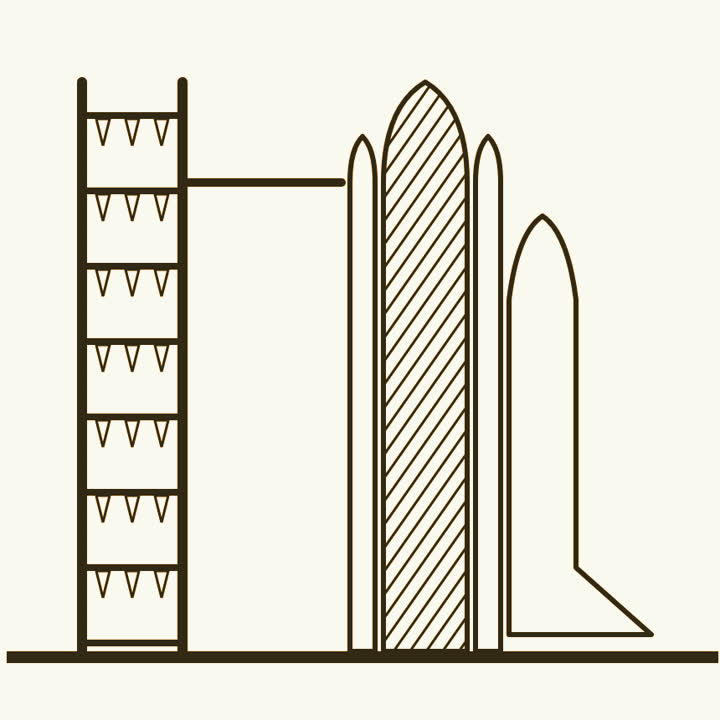
On a January morning in 1986, the space shuttle Challenger stood ready to launch.
At the launch pad in Florida, the air was far colder than for any earlier shuttle launch. Among the crew of seven was Christa McAuliffe, a schoolteacher chosen to fly in space. The shuttle’s booster rockets were built in sections, and each joint was sealed by rubber rings called O rings.
The night before, engineers at the booster maker Morton Thiokol argued against launching.
They feared that cold rubber would not seal the joints properly. They had seen seal damage after an earlier launch in cold weather. Roger Boisjoly and Arnie Thompson argued hardest against going ahead.
Then Thiokol’s managers reversed their own engineers’ recommendation.
During a break in the discussion, a senior manager asked a colleague to take off his engineering hat and put on his management hat. The company approved the launch, and NASA accepted its approval.
Just over a minute after launch, Challenger broke apart in the sky.
The cause was a failed seal in a joint between two lower sections of the right booster rocket. Hot gas escaped through the joint. All seven crew members died.
President Reagan set up a commission to find out what had gone wrong.
Its members included the astronaut Sally Ride and the physicist Richard Feynman. Another member, General Donald Kutyna, steered Feynman toward the cold and the O rings. Kutyna later said that Sally Ride had quietly passed him the key information.
At a televised hearing in February 1986, Feynman tested a piece of O ring rubber.
He squeezed it in a small clamp and dipped it in a glass of iced water. When he took it out and released the clamp, the rubber did not spring back. Cold rubber lost its springiness, so it could seal a joint too slowly.
So when experts warn against a decision, ask what is pushing it ahead anyway.
The engineers had the right concern, and they raised it before the launch. The warning was not missing. It was overruled. Feynman ended his own appendix to the report by warning that nature cannot be fooled.
Sources
- Personal observations on the reliability of the Shuttle, Richard Feynman, Rogers Commission report. Feynman’s own appendix to the report.
- The contributing cause of the accident, Rogers Commission report, NASA. The chapter on the launch decision and the engineers’ objections.
- How Richard Feynman found the root of the Challenger disaster, Nautilus. A readable account of the investigation and the iced water moment.
Nearby ideas
- The cracks nobody could see. How investigators found the hidden cracks that brought down the first jet airliner.
- Two rods instead of one. How a small change to a design doubled the load on a hotel walkway.
- Cheap steel and a costly mistake. How cheap steel failed for everyone except its inventor, and why.
- The bridge that twisted itself apart. How a steady wind twisted a brand new bridge until it fell.
- The ships that cracked in the cold. How welded wartime ships cracked in the cold, and the scientist who worked out why.