Cobra Effect · Decisions and strategy
The map is not the territory
Every model leaves something out, and that is where it fails.
6 cards, read aloud in 2:33, with a test and sources.
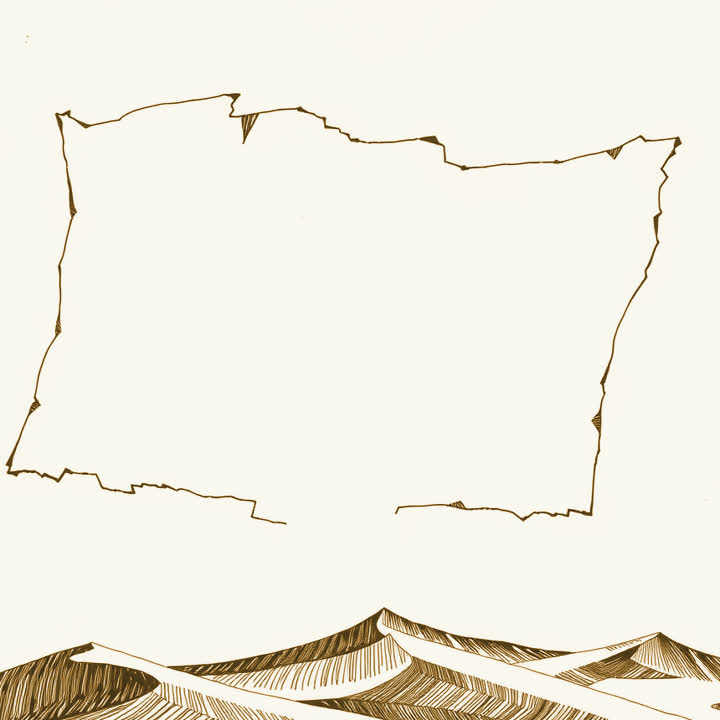
The empire’s cartographers make a map so good it is useless.
Jorge Luis Borges wrote the story in 1946, in a single paragraph. Each map is more detailed than the last. In the end the guild draws a map of the empire at the size of the empire, point for point. The next generation abandons it, and the map rots in the desert, sheltering animals and beggars.
Lewis Carroll got there first, with a joke.
In 1893 he gave a character a map at a scale of a mile to the mile. It had never been unfolded. The farmers objected that it would block the sunlight. So they used the country itself as its own map, and it did nearly as well.
Alfred Korzybski said it plainly in 1931. The map is not the territory.
He was a Polish engineer turned philosopher of language, speaking to a room of mathematicians in New Orleans. Every model, word, chart or spreadsheet is a map. It is useful because it leaves things out. It is dangerous the moment you forget that it did.
A good map lies on purpose.
The London Underground map bends every line straight and ignores every distance, and that is why it works. A budget ignores everything that is not money. A job title ignores everything the person actually does. Each leaves out what you do not need, for that purpose. Use the map for a different purpose and the missing parts come back to bite.
The trouble starts when the map gets an owner.
A metric on a wall, a plan in a binder, a diagnosis on a chart. People start managing the map, because the map is what they can see. The territory carries on regardless. The patient who does not match the diagnosis is still the patient.
The habit is to go and look.
When the numbers and the ground disagree, the ground is right. So walk the floor. Read the complaint, not the summary of complaints. Sit with the customer. And ask of every model you use: what did this leave out, and does it matter here? The map got you there. The territory is where you are standing.
Sources
- Science and Sanity, Alfred Korzybski, 1933. Where the 1931 remark grew into a system. Long and strange. The Wikipedia page gives the phrase, the New Orleans paper and the context.
- On Exactitude in Science, Jorge Luis Borges, 1946. One paragraph. The map the size of the empire, and what became of it. Read it twice.
- Seeing Like a State, James C. Scott, 1998. What happens when governments manage the map instead of the territory. Forests, cities and farms rebuilt to match the plan, and what it cost.
Nearby ideas
- Goodhart’s law. A measure turned into a target stops telling you the truth.
- What you measure is what you get. Why the number you chase quietly replaces the thing you wanted.
- The narrative fallacy. We invent causes for events because stories feel like explanations.
- The pre-mortem. Imagine the project has already failed, then ask why, before it starts.
- The prisoner’s dilemma. Why two sensible people can both choose the worst outcome.
- The Overton window. Ideas move from unthinkable to normal before politicians touch them.
- Satisficing. Good enough, chosen quickly, often beats the endless hunt for best.
- Schelling points. Without talking, people meet at whatever stands out.