Cobra Effect · Decisions and strategy
The Overton window
Ideas move from unthinkable to normal before politicians touch them.
6 cards, read aloud in 2:37, with a test and sources.
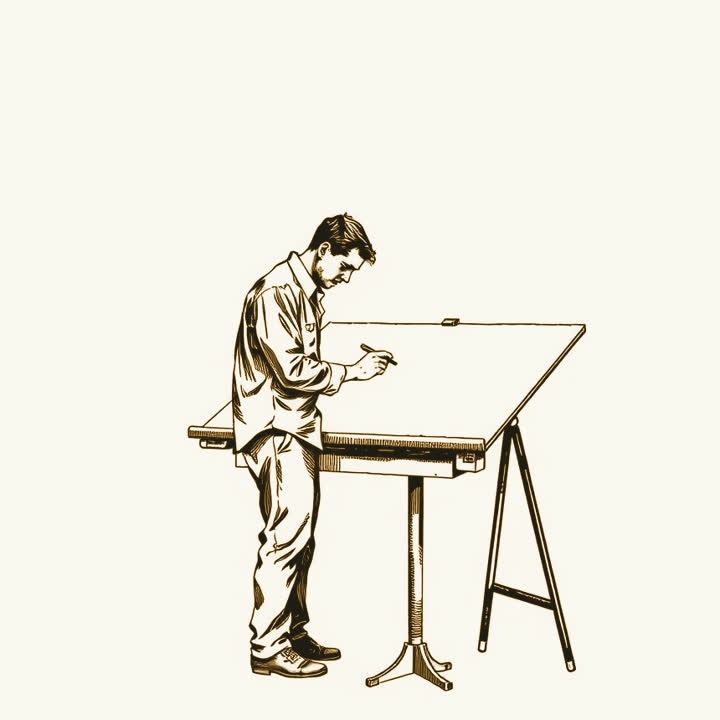
Michigan, the 1990s. A think tank needs to explain what it is for.
Joseph Overton is a senior vice president at the Mackinac Center for Public Policy. He wants to show why a think tank bothers with ideas no politician will touch. So he draws a picture for a brochure. A vertical line of policies, from no government at all to total government control.
Somewhere on the line is a window.
Inside it are the policies a politician can propose and still be elected. Outside it, they will be called radical, or unthinkable. The window does not sit where the best ideas are. It sits where the public is.
That is the Overton window. And it moves.
Politicians rarely move it. They find it and stand inside. Joseph Lehman, who named the idea after Overton died in 2003, said lawmakers are in the business of detecting where the window is. What moves it is everything else. Books, campaigns, scandals, a generation growing up. Ideas travel from unthinkable to radical to acceptable to sensible to popular to policy.
Prohibition went in through the window, and back out.
In 1920, banning alcohol across the United States was policy. By 1933 it was repealed. Today a candidate proposing it would be laughed off the stage. Same country. The window moved. Votes for women, smoking bans and the eight hour day all walked the same road in the other direction.
The trick people use to move it.
Say something far outside the window, loudly. It gets called extreme, and it is. But next to it, the idea one step inside looks moderate. The window has shifted, not by persuasion but by comparison. Once you can see the move, you can decide whether to be moved.
Before you call an idea impossible, ask where the window is.
Not whether the idea is good. Whether it is inside the window today. If it is outside, the work is not to win the vote. It is to move the window first. And when a proposal suddenly seems reasonable, ask what extreme thing you heard just before it.
Sources
- The Overton Window, Mackinac Center for Public Policy. The think tank’s own explanation of the idea, with Prohibition as its example and the point that politicians follow the window rather than move it.
- How Change Happens, Cass Sunstein, 2019. How norms shift, why people hide what they think until others speak first, and how the unthinkable becomes ordinary. The mechanics of a moving window.
- Overton window, Wikipedia. The history of the idea, the six steps from unthinkable to policy, the criticism, and how the phrase escaped into everyday argument.
Nearby ideas
- Pluralistic ignorance. Everyone can privately doubt a rule that nobody questions out loud.
- Anchoring. The first number you hear bends every estimate that follows.
- Schelling points. Without talking, people meet at whatever stands out.
- Satisficing. Good enough, chosen quickly, often beats the endless hunt for best.
- Two-way doors. Decide reversible things fast, and save care for what you cannot undo.
- The Pareto principle. A few causes usually produce most of the results.
- The Eisenhower matrix. Urgent things crowd out important ones unless you protect them.
- Hofstadter’s law. It always takes longer than you expect, even when you allow for that.