Cobra Effect · Thinking and evidence
Choice overload
Too many options that are hard to compare can stop people choosing.
6 cards, read aloud in 2:21, with a test and sources.
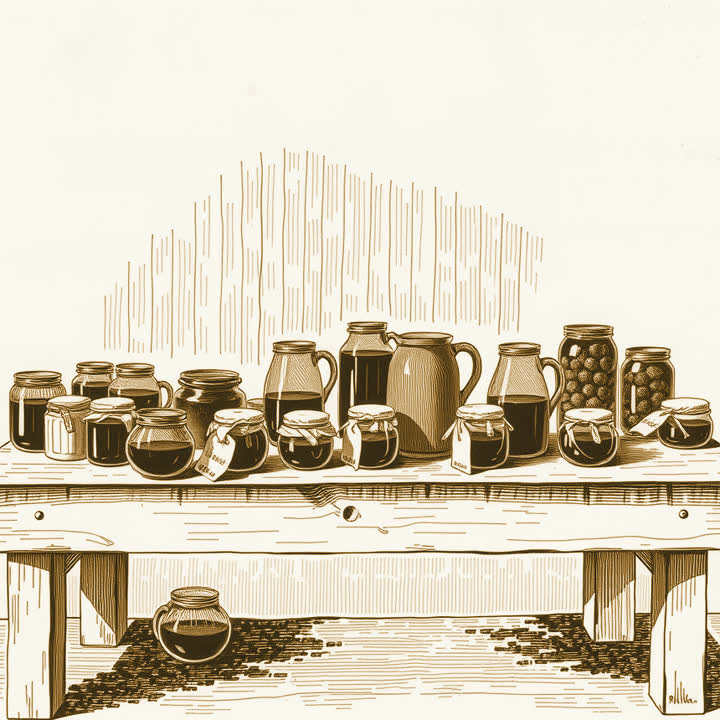
A California grocery store. A tasting table with 24 jams.
Sheena Iyengar and Mark Lepper set it up to see who would stop and who would buy. On other days they put out only 6. Six jars, or 24. Which table do you think sold more?
The big table drew the crowd. The small table made the sales.
About 60% of people passing stopped at the 24 jams. About 40% stopped at the 6. But of those who stopped at the small table, around 30% bought a jar. At the big table, about 3%. About seven times the sales, from a quarter of the choice. They published what happened in 2000.
More options make a better shop window and a worse decision.
A big display is interesting. It pulls you in. Then you have to compare 24 things, and every one you pick means giving up 23 others. So you put the spoon down and buy nothing. That is choice overload.
Now the part the popular version leaves out.
The jam study became famous, and then people tried to repeat it. In 2010 Benjamin Scheibehenne and colleagues pooled around 50 experiments and found the average effect was close to zero. Sometimes more choice hurts. Often it does nothing. Occasionally it helps.
So when does a long list actually stop people?
The later work points at conditions rather than a rule. When the options are hard to tell apart, when you do not already know what you want, and when getting it wrong matters. A wall of 40 near identical insurance policies is the dangerous case. A wall of 40 paint colours is not.
What to do when you are the one offering the choice.
Cut the list to the few that genuinely differ. Say which one most people take, and why. And when you are the one choosing, decide what would be good enough before you look. Then take the first one that clears the bar and put the spoon down.
Sources
- Overchoice, Wikipedia. The jam study by Iyengar and Lepper in 2000, the conditions under which the result holds, and the later meta-analyses that found the average effect close to zero.
- The Paradox of Choice, Barry Schwartz, 2004. The popular case for the idea, written before most of the replications came in. Read it for the argument, then read the meta-analysis for the correction.
- Sheena Iyengar, Wikipedia. The researcher who ran the jam stall, her later work on how people choose, and what she has said her own famous study did and did not show.
Nearby ideas
- Satisficing. Good enough, chosen quickly, often beats the endless hunt for best.
- Explore and exploit. When to try something new, and when to stick with what works.
- The framing effect. The same facts, worded differently, lead to different choices.
- The razors. Simple rules for cutting away explanations you do not need.
- Survivorship bias. The failures you never see can reverse the lesson you draw.
- The Dunning Kruger effect. Why the least skilled are often the worst judges of their skill.
- Confirmation bias. We look for evidence that agrees, and rarely test what could say no.
- The planning fallacy. Why projects nearly always take longer than we plan.