Cobra Effect · Thinking and evidence
The razors
Simple rules for cutting away explanations you do not need.
6 cards, read aloud in 1:48, with a test and sources.
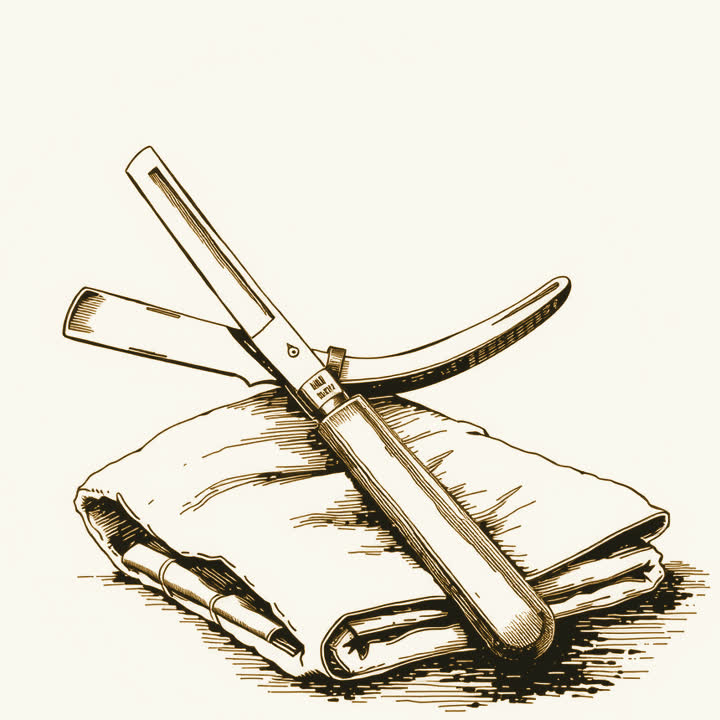
A razor is a rule for cutting away what you don’t need.
Philosophers have a handful of them. Each one is a fast way to throw out a bad explanation before you spend an afternoon on it.
Occam’s razor. Don’t multiply entities beyond necessity.
When two explanations fit the facts, prefer the one with fewer assumptions. Not because simple is always true. Because every extra assumption is another place to be wrong.
Hanlon’s razor. Never attribute to malice what stupidity explains.
The email that ignored you was probably not read. The rule that blocks you was probably written for a different problem. Assume the boring cause first. It is usually right, and it keeps you civil.
Hitchens’s razor. What is asserted without evidence can be dismissed without evidence.
You are not obliged to disprove a claim that arrived with nothing. The burden sits with whoever made it.
The Sagan standard. Extraordinary claims require extraordinary evidence.
A claim that would overturn a lot of settled knowledge needs proportionately more support than one that fits what we already know. The scale of the claim sets the bar.
Use them in order.
Is there a simpler explanation? Is it a mistake rather than a plot? Did they bring evidence at all? Is it enough for a claim that size? Four questions, thirty seconds, and most bad arguments never make it past the second.
Sources
- Occam’s razor, William of Ockham, 14th century. The oldest of the four and the most misquoted. The article traces what Ockham actually said, how the razor got his name, and the cases where the simplest explanation was wrong.
- The Demon-Haunted World, Carl Sagan, 1995. Sagan first put the standard into words on television, in Cosmos in 1980. This later book has the chapter on the baloney detection kit, a whole toolbox of razors written for a general reader.
- Philosophical razor, Wikipedia. The whole family on one page: Occam, Hanlon, Hitchens, Sagan and a few the story left out, each with its origin and its one line form.
Nearby ideas
- The Dunning Kruger effect. Why the least skilled are often the worst judges of their skill.
- Survivorship bias. The failures you never see can reverse the lesson you draw.
- Chesterton’s fence. Before removing a rule, find out why it was put there.
- Confirmation bias. We look for evidence that agrees, and rarely test what could say no.
- The planning fallacy. Why projects nearly always take longer than we plan.
- Base rate neglect. A good test for a rare thing still gives mostly false alarms.
- Anchoring. The first number you hear bends every estimate that follows.
- The availability heuristic. Vivid stories make rare dangers feel common.