Cobra Effect · Evidence in medicine
Twelve sailors and a fair test
How a fair test at sea pointed to a remedy for scurvy, decades before the Navy acted.
7 cards, read aloud in 3:03, with a test and sources.
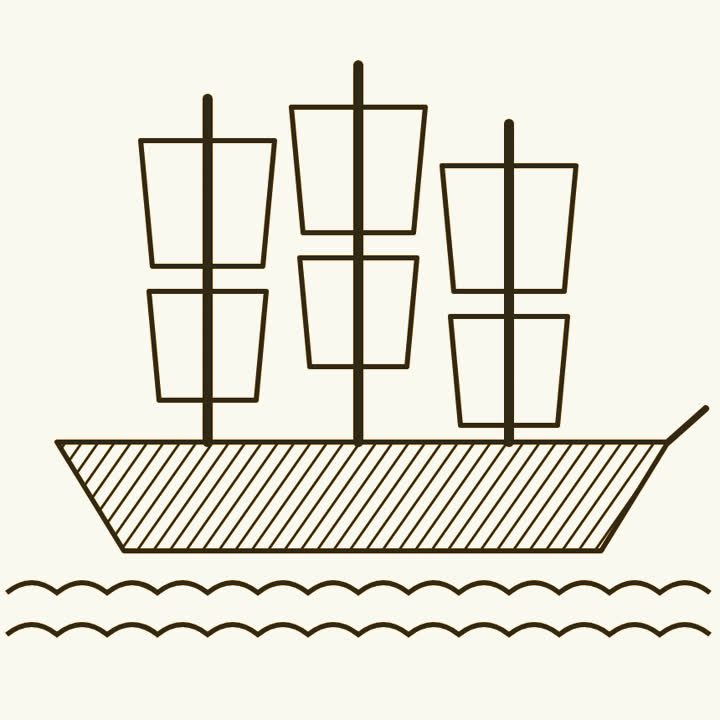
In May 1747, scurvy was spreading through a British warship.
James Lind was the surgeon aboard HMS Salisbury, a Royal Navy ship at sea. Scurvy made gums swell and bleed, and left sailors too weak to work. It could even break open wounds that had long since healed. Doctors had plenty of remedies for it, and little idea which ones worked.
Lind chose twelve sick sailors whose illness looked alike.
He kept them together in the same part of the ship, on the same basic food. Then he split them into six pairs. Each pair got a different remedy on top of the ordinary diet. If one pair recovered and the others did not, the remedy was the likeliest reason.
The remedies were ones that sailors and doctors already trusted.
One pair drank cider each day. Another took drops of a weak acid called elixir of vitriol. Others had vinegar, or half a pint of sea water. One pair ate two oranges and a lemon a day. The last pair swallowed a paste of garlic, mustard seed and other ingredients.
Within six days, the pair eating oranges and lemons were on their feet.
One was fit for duty. The other recovered so well that he was set to nursing the rest. The fruit then ran out, so that part of the test ended there. The pair given cider showed some improvement. The others did not.
Yet Lind did not conclude that citrus fruit was the answer.
He published A Treatise of the Scurvy in 1753. In it he blamed the disease on several things together, including damp sea air and a poor diet. He also recommended a juice boiled down so it would keep on long voyages. Boiling destroys much of what makes the juice work, though nobody then knew why.
Almost fifty years later, the Navy began issuing lemon juice on a large scale.
Gilbert Blane, a leading naval physician, pressed the Admiralty to act. In 1795 it approved lemon juice for sailors far more widely. Within a few years, scurvy had become rare in the Royal Navy. The substance that prevents it, vitamin C, was only identified in the early 1930s.
So when someone says a remedy works, ask what it was compared with.
Lind’s test worked because the sailors were alike and treated alike, apart from one thing. That let the result speak, long before anyone could explain it. Fair comparisons like his are now the backbone of medical trials. But a clear result still has to be believed and acted on before it saves anyone.
Sources
- Who was James Lind, and what exactly did he achieve?, The James Lind Library. What the 1747 test showed, and what Lind himself made of it.
- James Lind and scurvy: 1747 to 1795, The James Lind Library. Why it took almost fifty years for the Navy to act.
- The Age of Scurvy, Science History Institute. How scurvy was fought, forgotten and finally understood.
Nearby ideas
- The pump that spread cholera. How a map of deaths around one pump showed that cholera spreads through water.
- Germs do not come from nowhere. How a swan-neck flask and a country doctor proved that germs cause disease.
- The doctors who tracked smoking. How two doctors showed smoking causes lung cancer without a single experiment.
- The reviewer who asked for more. How one reviewer's demand for better evidence kept thalidomide off American shelves.
- Nearly two million children and a fair test. How a vast, blinded trial showed the polio vaccine worked, and why checking went on.
- The first public operation under ether. How a public test in Boston made painless surgery believable.
- The cells that would not stop growing. How one woman's cells changed medicine, and the question of consent they raised.