Cobra Effect · Evidence in medicine
Nearly two million children and a fair test
How a vast, blinded trial showed the polio vaccine worked, and why checking went on.
7 cards, read aloud in 3:03, with a test and sources.
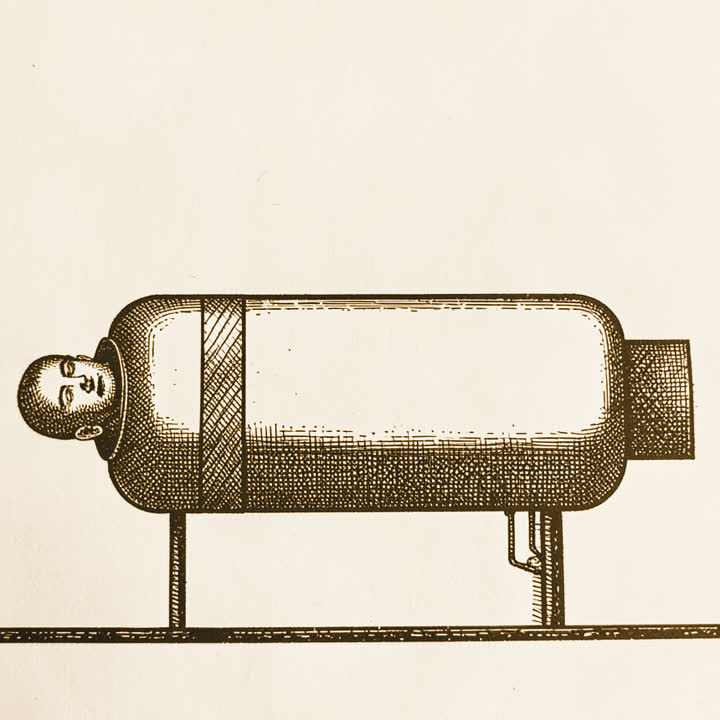
In the early 1950s, polio frightened American parents every summer.
The virus could paralyse a child within days, and some needed machines to help them breathe. In 1952, the United States recorded its worst polio epidemic. At the University of Pittsburgh, Jonas Salk developed a vaccine made from killed virus. Early tests looked promising. But were they enough?
A vaccine that seems to work in a few people could still fail, or do harm.
Polio came and went from year to year and town to town. A drop in cases after vaccination might just be a quiet year. So in 1954, a huge field trial began, led by Thomas Francis at the University of Michigan. Nearly two million schoolchildren took part.
In part of the trial, children got either the vaccine or a dummy injection.
The two looked identical, and each vial carried only a code. Neither the children nor their doctors knew who had received which. Elsewhere, vaccinated children were compared with classmates who were not injected at all. Salk himself had doubts about the dummy injections, but they made the comparison far harder to fool.
Why hide who got the real vaccine?
A doctor who knows a child is vaccinated might judge a mild illness differently. Parents might notice and report symptoms differently too. With the codes hidden, those differences could not tilt the result. Only the count of cases at the end could decide.
In April 1955, Francis announced the results.
The vaccine was safe, and between eighty and ninety percent effective against paralytic polio. The same afternoon, the government licensed it for use. Vaccination of children began almost at once.
Within weeks, a fault at one factory showed why checking had to continue.
Some batches made by Cutter Laboratories contained live virus that had not been properly killed. Thousands of children were infected. About two hundred were left with some paralysis, and ten died. The vaccine was recalled, and the government set up much stricter oversight of vaccine making. Polio cases in the United States then fell steeply.
So when a treatment looks promising, ask how it was tested.
A fair test compares like with like, and hides who got what until the end. The polio trial had to be vast, because in any one year few children caught polio, and a small trial could miss the difference. Even after a clear result, making and using the treatment needs checking too. Good evidence is not a single moment, but a habit.
Sources
- 1955 Polio Vaccine Trial Announcement, University of Michigan School of Public Health. The trial Thomas Francis led, and the day its results were announced.
- The Salk polio vaccine: “Greatest public health experiment in history”, CBS News. How nearly two million children took part in the 1954 trial.
- Historical Vaccine Safety Concerns, US Centers for Disease Control and Prevention. Including the Cutter incident of 1955 and what changed afterwards.
Nearby ideas
- Twelve sailors and a fair test. How a fair test at sea pointed to a remedy for scurvy, decades before the Navy acted.
- The reviewer who asked for more. How one reviewer's demand for better evidence kept thalidomide off American shelves.
- From a milkmaid’s hand to the end of smallpox. How a country saying about milkmaids led to the first vaccine and the end of smallpox.
- The first public operation under ether. How a public test in Boston made painless surgery believable.
- The cells that would not stop growing. How one woman's cells changed medicine, and the question of consent they raised.
- The doctors who tracked smoking. How two doctors showed smoking causes lung cancer without a single experiment.