Cobra Effect · Decisions and strategy
Zero sum thinking
Most deals are not fixed pies, and treating them as one wastes value.
7 cards, read aloud in 2:21, with a test and sources.
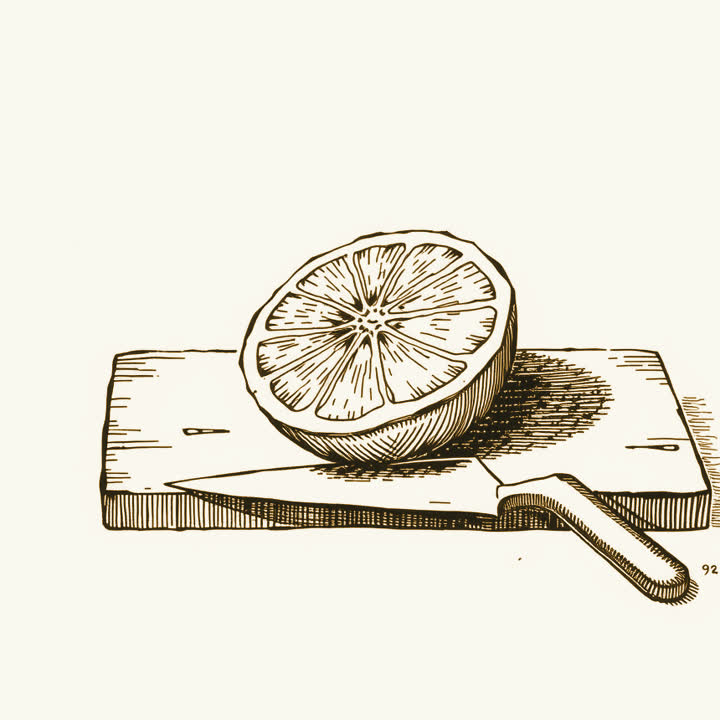
Two sisters, one orange, and a knife.
They argue, then cut it down the middle, which feels fair. One squeezes her half for juice and throws the peel away. The other grates her peel for a cake and throws the fruit away. A whole orange was available to each of them.
Neither of them asked the other why.
Each assumed the other wanted exactly what she wanted. If the thing on the table is one fixed quantity, every slice you take is a slice I lose. That assumption is the whole mistake, and negotiation teachers have been telling this story for decades.
Sometimes the pie really is fixed.
One job and three candidates. A budget already spent. The last seat on a coach. In those rooms a gain for one side is a loss for the other, and pretending otherwise is just soft headed. The error is not seeing it. The error is assuming it everywhere.
Trade is the oldest counterexample.
In 1817 David Ricardo showed that two countries can both end up better off by each making what they give up least to make. No conquest. No theft. Just swapping. The gain comes out of the difference between them.
Where it bites hardest is across a table.
People arrive certain that the other side wants the same thing they want. Usually the two sides rank things differently, and that difference is money lying on the floor. Price matters to one, timing to the other. Trade them and both do better than splitting.
The assumption leaks out of the meeting room.
If you believe wealth is one fixed lump, then anyone else’s success is a theft from you. It makes for bitter politics and poor neighbours. Most of what we have was made, not taken off somebody.
The question that opens a stuck room.
Ask the other side what they want it for. Not what they are asking for. What it is for. Half the time you will find you want different parts of the same orange.
Sources
- Zero-sum thinking, Wikipedia. The habit of treating every situation as a fixed quantity to be divided, with the research on where it comes from and what it costs.
- Getting to Yes, Roger Fisher and William Ury, 1981. The negotiation book that taught a generation to ask what the other side wants it for, rather than haggling over one number.
- Comparative advantage, Wikipedia. Ricardo’s argument from 1817 that two countries can both gain from trade even when one is better at making everything.
Nearby ideas
- The prisoner’s dilemma. Why two sensible people can both choose the worst outcome.
- The framing effect. The same facts, worded differently, lead to different choices.
- Loss aversion. Losing something hurts about twice as much as gaining it pleases.
- Tit for tat. Cooperate first, answer a betrayal once, then forgive.
- BATNA. Your power in a negotiation is what you will do if you walk away.
- Explore and exploit. When to try something new, and when to stick with what works.
- First principles. Rebuild a problem from what must be true, not from what everyone does.
- Opportunity cost. The real price of anything is the best thing you gave up for it.