Cobra Effect · Thinking and evidence
Loss aversion
Losing something hurts about twice as much as gaining it pleases.
6 cards, read aloud in 2:38, with a test and sources.
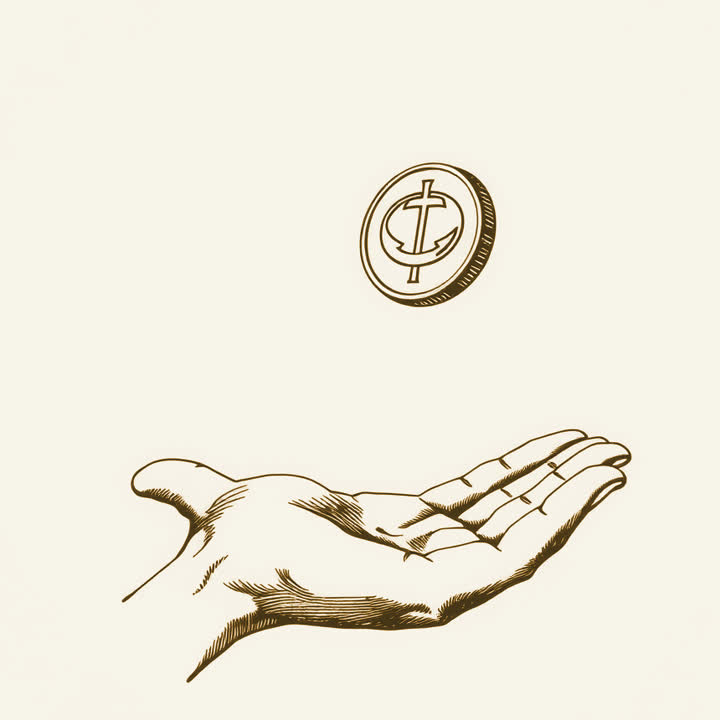
I will flip a coin. Tails, you give me 100 dollars. Heads, I give you how much?
Most people will not play for 100. Nor for 120, nor 150. Somewhere around 200 dollars, they start to say yes. The coin is fair. The maths says anything above 100 is a good bet. The gut says otherwise.
Daniel Kahneman and Amos Tversky measured that gut in 1979.
Their paper on how people choose between gambles became one of the most cited in economics. The core finding fits on a napkin. Losses loom larger than gains. Losing 100 hurts about twice as much as winning 100 feels good.
That is loss aversion.
Not a fear of risk. A lopsided response to the two directions. A later estimate put the ratio at a little over two to one. Which is why a pay cut of 5% stings far more than a 5% rise pleases. And why people hold losing shares for years rather than sell and make the loss real.
It shows up on the golf course.
In 2011 two economists studied millions of putts by professional golfers. The same putt from the same distance was sunk more often when it was to save par than when it was for a birdie. Missing par is a loss. Missing a birdie is a gain forgone. The best players in the world tried harder to avoid the loss.
How big it is, and even whether it is always there, is argued about.
In 2018 David Gal and Derek Rucker said the evidence was thinner than the fame. For small amounts, they found little sign of it. Other researchers replied that it is real but varies with the stakes and the person. The two to one figure is a rough average, not a law of physics. Hold the number loosely. Hold the direction firmly.
Use it, and watch for it being used on you.
A free trial that is about to expire pulls harder than a discount ever did, because ending it feels like losing something. Framed as what you will lose, a warning gets read. When you feel a decision pulling hard, ask whether you are avoiding a loss or choosing a gain. Then ask what a stranger with no history would do.
Sources
- Loss aversion, Wikipedia. The 1979 origin, the estimates of its size, the golf study, and the 2018 argument about whether it has been oversold. Search Prospect Theory An Analysis of Decision under Risk for the paper.
- Thinking, Fast and Slow, Daniel Kahneman, 2011. Chapter twenty six introduces prospect theory and chapter twenty eight is titled Bad Events. The coin flip, the golfers and the two to one ratio are all there.
- Endowment effect, Wikipedia. The cousin finding. People demand about twice as much to give up a coffee mug as they would pay to get one, and why owning something moves the reference point.
Nearby ideas
- The framing effect. The same facts, worded differently, lead to different choices.
- The sunk cost fallacy. Money already spent is gone, so it should not steer the next choice.
- Anchoring. The first number you hear bends every estimate that follows.
- The curse of knowledge. Once you know something, you cannot see what a beginner is missing.
- Bayesian updating. Change your mind in proportion to the strength of the evidence.
- Overconfidence. Why we feel more certain than our knowledge allows.
- The halo effect. One good quality colours how we judge all the others.
- Motivated reasoning. We set a lower bar for evidence we want to believe.