Cobra Effect · Measurement
Weighing the Earth in a shed
How Henry Cavendish measured the density of the whole Earth from inside a shed.
7 cards, read aloud in 2:33, with a test and sources.
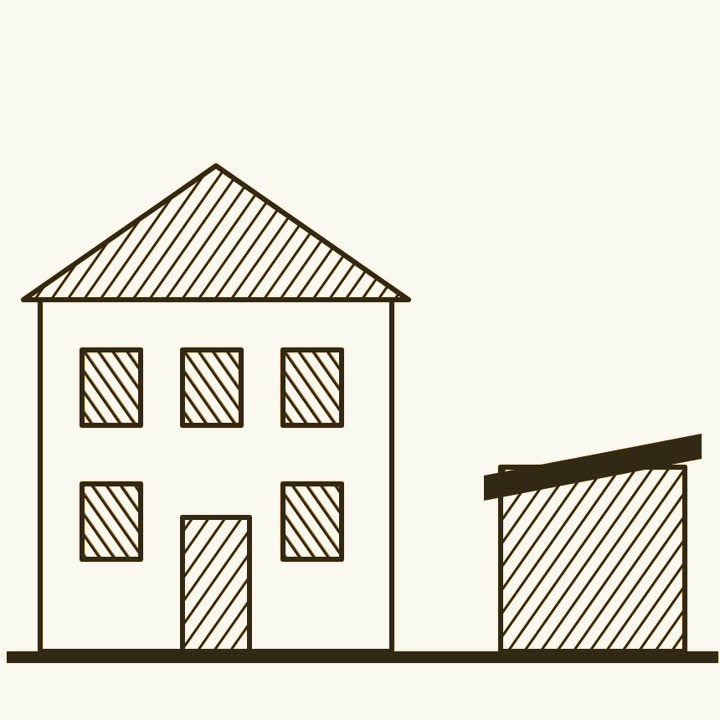
In 1797, Henry Cavendish set out to find how dense the whole Earth is.
He was a wealthy and famously shy scientist, who worked at his house in Clapham, near London. Knowing the Earth’s density would reveal its mass, and hint at what lies deep inside it.
The idea came from the geologist John Michell.
Michell designed a delicate twisting balance for the experiment, but died in 1793 before he could carry it out. The apparatus passed to Cavendish, who largely rebuilt it while keeping Michell’s plan.
At its heart was a wooden rod hanging from a thin wire.
The rod was about six feet long, with a small lead ball at each end. Two much larger lead balls, each about three hundred and fifty pounds, could be swung close to the small ones. Their gravity pulled the small balls toward them, twisting the wire very slightly.
The pull was so tiny that a draught or a little warmth could swamp it.
So Cavendish shut the apparatus away in a closed shed. He moved the large balls from outside, and watched the rod through telescopes set into the walls, with lamps outside to light the markings. The rod swung very slowly, taking several minutes for each swing.
In 1798, he reported that the Earth is about five and a half times as dense as water.
His published figure was five point four eight. His own data actually average slightly less, because of a small arithmetic slip. The modern value is about five point five one, so he was within about one percent.
He is often said to have measured the strength of gravity, but he did not.
Cavendish never gave a value for the gravitational constant, the number that sets how strong gravity is. Writing the law of gravity with that constant became standard only later. Later scientists worked out the constant from his result.
So when a signal is tiny, ask what could drown it out before you try to measure it.
Cavendish’s real skill was shielding a very weak pull from every stronger disturbance. The balance itself was simple. Keeping everything else still was the hard part. A careful setup can reveal a force far too small to feel.
Sources
- Henry Cavendish, Linda Hall Library. A profile of Cavendish and the density experiment.
- Cavendish experiment, Wikipedia. The apparatus, Michell’s role and the arithmetic slip.
Nearby ideas
- The kilogram that drifted. How the kilogram stopped being a lump of metal, and became a constant of nature.
- The metre and the lumpy Earth. How two astronomers measured the metre, and why it came out slightly short.
- A metre made of light. How the metre went from a metal bar to the speed of light.
- The watch that found longitude. How a clockmaker solved longitude with a watch, and fought for years to be paid.