Cobra Effect · Space
The hiss left over from the Big Bang
How a hiss in a radio antenna turned out to be the afterglow of the Big Bang.
7 cards, read aloud in 3:24, with a test and sources.
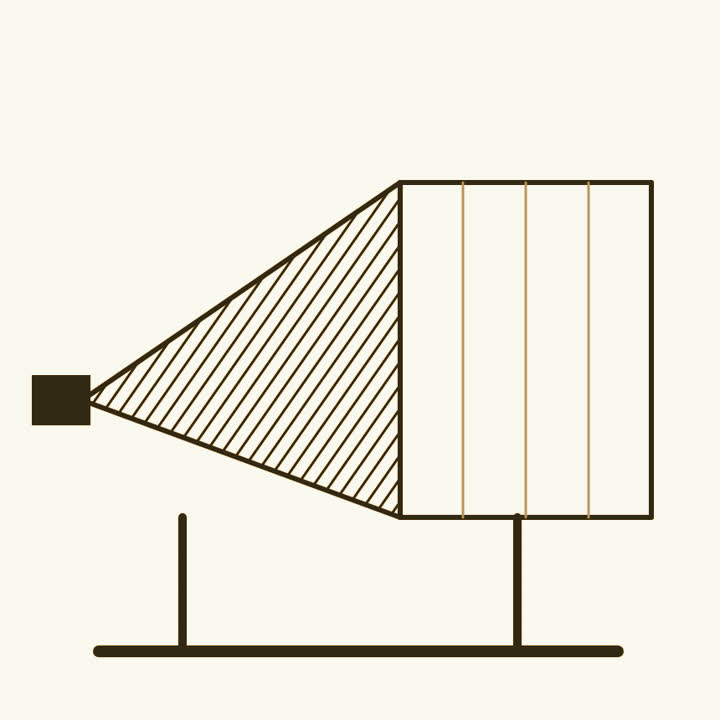
In 1964, two radio astronomers at Bell Labs were bothered by a faint hiss.
Arno Penzias and Robert Wilson were using a large horn-shaped antenna at Holmdel, in New Jersey. It had been built for early experiments with communication satellites, and was extremely sensitive. Wherever they pointed it in the sky, they picked up a weak, steady noise. It was the same in every direction, by day and by night.
They tried everything to get rid of it, including removing a pair of pigeons.
They checked their equipment, and ruled out nearby New York City. Pigeons had been nesting inside the antenna. The two men cleaned out what the birds had left behind, which Penzias later called a white dielectric material. The hiss remained.
Nearby, at Princeton, Robert Dicke’s team was preparing to search for just such a signal.
If the universe began hot and dense, a faint glow of radiation should still fill space. As the universe expanded, that glow would have cooled to a few degrees above absolute zero. In 1948 Ralph Alpher and Robert Herman had predicted a leftover glow like this. Dicke’s group was building an instrument to look for it.
A phone call brought the two groups together, and Dicke realised they had been beaten to it.
Penzias heard about the Princeton work, and called Dicke. After the call, Dicke is said to have told his colleagues that they had been scooped. In 1965 the two groups published side by side: one reported the hiss, the other explained it. The hiss was the cosmic microwave background, the afterglow of the Big Bang.
The glow arrives from every direction, and is almost perfectly even.
It was released about three hundred and eighty thousand years after the Big Bang, when the universe had cooled enough for light to travel freely. The expansion of space has since stretched that light into microwaves. Its temperature today is about two point seven degrees above absolute zero. In the early 1990s the COBE satellite showed that its spectrum matches a perfect glowing body almost exactly.
In 1978, Penzias and Wilson shared the Nobel Prize in Physics.
They shared that year’s prize with Pyotr Kapitsa, who was honoured for different work. Their discovery helped convince most astronomers that the Big Bang really happened. The rival Steady State theory, in which the universe has no beginning, could not easily explain the glow. Later satellites mapped tiny ripples in it, the seeds of galaxies that formed long afterwards.
So when a nuisance will not go away, ask whether it is trying to tell you something.
Penzias and Wilson set out to remove some noise, and found the oldest light in the universe. They took the hiss seriously only after ruling out every ordinary cause. A small part of the static on old analogue televisions came from this same glow. Scientists are still studying it in ever finer detail.
Sources
- Cosmic microwave background discovered 50 years ago today, American Museum of Natural History. The hiss, the pigeons and the phone call to Princeton.
- Confirming the Big Bang, Nokia Bell Labs. The lab’s own account of the discovery at Holmdel.
- How two pigeons helped scientists confirm the Big Bang theory, Smithsonian Magazine. The birds in the antenna, and the trap that caught them.
Nearby ideas
- The universe that is growing. How shifts in galaxies' light and their distances revealed that the universe is expanding.
- The galaxies that spin too fast. How galaxies spinning too fast revealed matter that no one can see.
- The first planet around a Sun-like star. How a star's tiny wobble revealed a giant planet where none was expected.
- The moons that circled Jupiter. How a few moving dots beside Jupiter challenged the old picture of the heavens.
- The planet found with pen and paper. How a planet straying off course led mathematicians to an unseen world.
- The stars that measure the universe. How a pattern in pulsing stars gave astronomers a way to measure the universe.