Cobra Effect · Space
The stars that measure the universe
How a pattern in pulsing stars gave astronomers a way to measure the universe.
7 cards, read aloud in 3:31, with a test and sources.
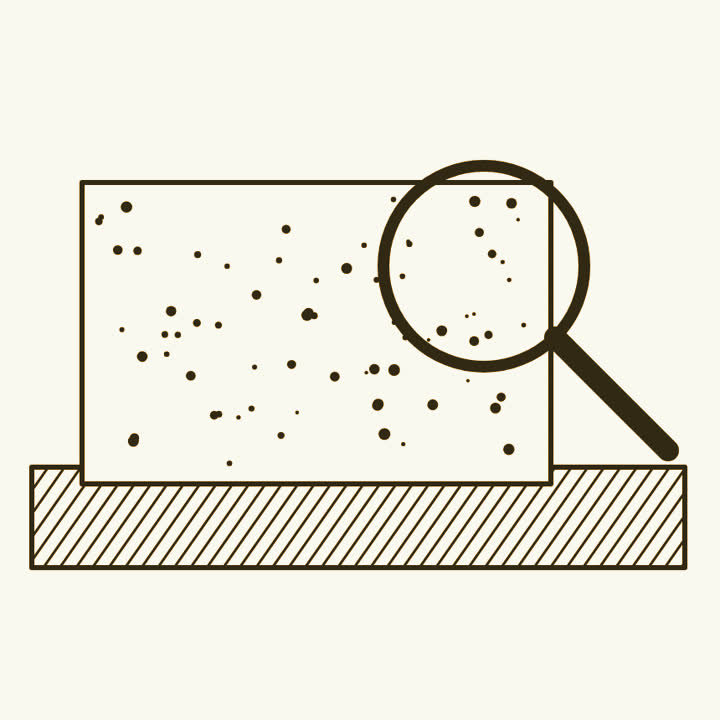
In the early 1900s, Henrietta Swan Leavitt studied photographs of the sky at Harvard.
She was one of a group of women employed at Harvard College Observatory to examine glass photographic plates. They were known as computers, and they measured and catalogued huge numbers of stars. Leavitt’s task was to find variable stars, which brighten and fade. She compared plates taken on different nights, looking for stars that had changed.
In the Magellanic Clouds, she found more than a thousand stars that change in brightness.
The Magellanic Clouds are two small galaxies, visible from the southern hemisphere. The plates of them came from Harvard’s observing station in Arequipa, in Peru. In 1908 she published a list of one thousand seven hundred and seventy seven variable stars in the two clouds. Some of them, now called Cepheids, brightened and faded with a steady rhythm.
In 1912 she reported that the brighter Cepheids took longer to pulse.
She studied twenty five Cepheids in the Small Magellanic Cloud. The longer a star took to brighten and fade, the brighter it appeared. All the stars in that cloud are at roughly the same distance from us. So the stars that looked brighter really were brighter. A Cepheid’s rhythm revealed its true brightness.
Knowing a star’s true brightness lets you work out how far away it is.
A candle looks dimmer the farther away it is. If you know how bright a light really is, how dim it looks tells you its distance. Cepheids became standard candles, lights of known brightness scattered across space. In 1913 Ejnar Hertzsprung used nearby Cepheids to set the scale, turning her pattern into distances.
In 1923 Edwin Hubble found a Cepheid in the Andromeda Nebula.
Astronomers were arguing over whether spiral nebulae like Andromeda lay inside our galaxy or far beyond it. Using the great telescope on Mount Wilson in California, Hubble photographed Andromeda. He spotted a star he first marked as an exploding star, then realised it was a Cepheid and relabelled it. Its rhythm put Andromeda about nine hundred thousand light years away, far outside our own galaxy.
Henrietta Leavitt did not live to see it.
She died of cancer in December 1921, at the age of fifty three. Her 1912 result appeared in a short Harvard circular, under her name and that of the observatory’s director, Edward Pickering. The relationship she found is now often called the Leavitt Law. Astronomers still use Cepheids to measure distances across the universe.
So when things share the same distance, ask what their differences can reveal.
Leavitt’s insight rested on a simple fact: all the stars in one small cloud are about equally far away. That turned a pattern in brightness into a ruler for the universe. Hubble went on to use distances like these to show that the universe is expanding. Modern measurements put Andromeda about two and a half million light years away.
Sources
- Leavitt’s standard candles, astrobites. What Leavitt found in her plates, and why it mattered.
- Hubble’s famous M31 VAR! plate, Carnegie Science. The photographic plate where Hubble marked Andromeda’s Cepheid.
- Henrietta Swan Leavitt, The Harvard Plate Stacks. Her work among the observatory’s glass plates.
Nearby ideas
- The moons that circled Jupiter. How a few moving dots beside Jupiter challenged the old picture of the heavens.
- The universe that is growing. How shifts in galaxies' light and their distances revealed that the universe is expanding.
- The hiss left over from the Big Bang. How a hiss in a radio antenna turned out to be the afterglow of the Big Bang.
- The galaxies that spin too fast. How galaxies spinning too fast revealed matter that no one can see.
- The first planet around a Sun-like star. How a star's tiny wobble revealed a giant planet where none was expected.
- The planet found with pen and paper. How a planet straying off course led mathematicians to an unseen world.