Cobra Effect · People and organisations
The Hawthorne effect
Being watched changes what people do, and muddies what you measure.
6 cards, read aloud in 2:34, with a test and sources.
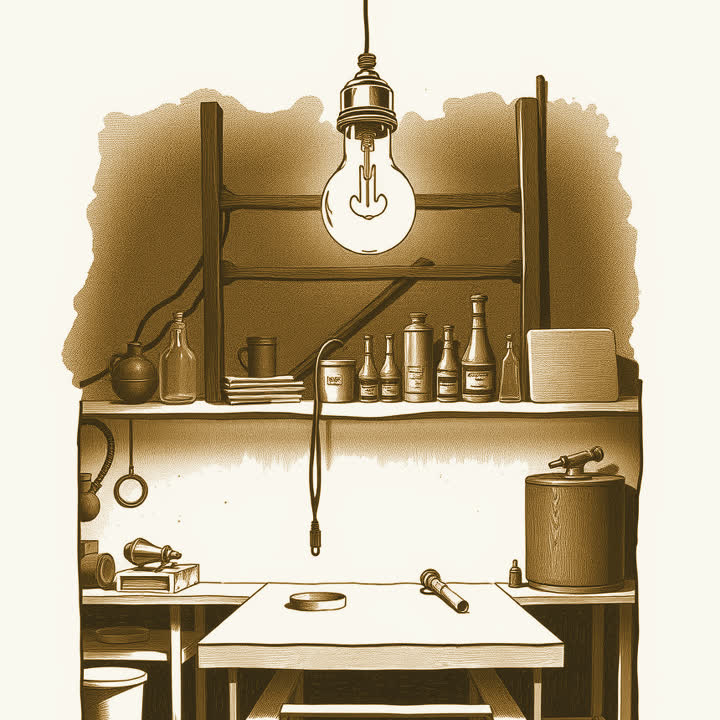
Chicago, 1924. A factory turns up the lights to see if the workers speed up.
The Hawthorne Works, a vast Western Electric plant making telephone equipment. Researchers brighten the lamps over a group of workers. Output goes up. Then they dim the lamps. Output goes up again.
For five years they try everything, and nearly everything works.
In 1927 five women are moved to a test room and watched. Rest breaks are added. Output rises. Free lunches. Rises. A shorter day. Rises. Then the breaks are taken away again. Output stays high.
The researchers reach a conclusion. It wasn’t the lights.
It was being watched. Being picked out, studied and asked their opinion, the women worked harder whatever was changed. Elton Mayo of Harvard turned it into a movement. Management, he argued, was about attention, not lighting. In 1958 the sociologist Henry Landsberger named it the Hawthorne effect.
The legend is neater than the data.
In 2011 two economists, Steven Levitt and John List, found the original lighting records in an archive. The output rise was small at best and mostly explained by other things, like the day of the week. In the test room, two of the five women had been replaced for talking too much, and pay had been tied to the group’s output. Attention was in the mix. So were money and fear.
The effect is real, and smaller than the story.
People do behave differently when they know they are being studied. Medical trials guard against it. A patient who is being watched tends to take the pills. But the size varies, and sometimes it is nothing. The tidy version, where any attention lifts any output, has never survived a careful look.
What to take from a legend.
If you measure a team and things improve, ask whether you changed the work or just the watching. Run the change on people who don’t know they are the experiment, if you can. And when someone quotes Hawthorne at you, ask which version. The one with the lights is the one that isn’t true.
Sources
- Was There Really a Hawthorne Effect at the Hawthorne Plant?, Steven Levitt and John List, 2011. The reanalysis of the rediscovered lighting data, in the American Economic Journal: Applied Economics. Search the title. The Wikipedia page summarises it.
- The Human Problems of an Industrial Civilization, Elton Mayo, 1933. Mayo’s own account of the studies and the movement he built on them. Read it knowing what the archives later showed.
- Hawthorne Works, Wikipedia. The factory itself. Tens of thousands of workers at its peak, the studies, and what became of the place.
Nearby ideas
- Regression to the mean. Extreme results drift back towards normal, whatever you do.
- What you measure is what you get. Why the number you chase quietly replaces the thing you wanted.
- The narrative fallacy. We invent causes for events because stories feel like explanations.
- Dunbar’s number. Why groups stop working the old way once they pass about 150.
- The bystander effect. The more people who see a problem, the less each one acts.
- The fundamental attribution error. We blame people’s character and overlook their situation.
- The Abilene paradox. How a group can agree to something that nobody wants.
- The Pygmalion effect. What we expect of people quietly shapes what they become.