Cobra Effect · People and organisations
The fundamental attribution error
We blame people’s character and overlook their situation.
6 cards, read aloud in 2:21, with a test and sources.
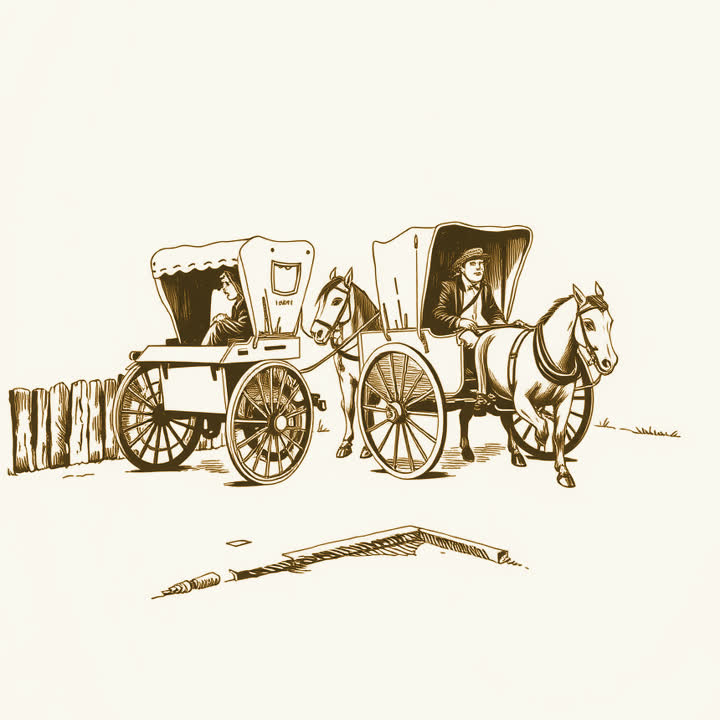
A man cuts in front of you at the junction. You know exactly what kind of person he is.
Selfish. Careless. The type. Last week you cut in front of someone, because you were late for the hospital and the lane markings were confusing. That was different. It was the situation.
1967. Students read an essay in praise of Fidel Castro.
Edward Jones and Victor Harris ran the study. Some readers were told the writer had chosen the position freely. Others were told the writer had been assigned it by a coin toss. The coin toss group knew the essay said nothing about the writer’s beliefs. They rated the writer as pro-Castro anyway.
Lee Ross gave it a name in 1977. The fundamental attribution error.
We explain other people’s behaviour by their character. We explain our own by our circumstances. The essay writer wrote it because that is who he is. You wrote yours because the professor told you to.
It is fundamental because it is the default, not because it is always wrong.
Sometimes the man at the junction really is that type. But you saw one act, in one situation, and read a whole person into it. Situations are invisible from the outside and overwhelming from the inside. The other driver’s hospital is not visible from your car.
It runs organisations.
The team that missed the deadline is lazy, not short of people. The new hire who is quiet is aloof, not lost. The customer who shouted is a nightmare, not someone who was on hold for an hour. Every one of those verdicts saves you from looking at the system that produced the behaviour. That is why it is so comfortable.
The habit that corrects it.
When someone does something stupid, ask what situation would make a sensible person do that. You will usually find one. And when you do something stupid, ask what a stranger watching would say about your character. You are the stranger, to everyone else.
Sources
- The attribution of attitudes, Edward Jones and Victor Harris, 1967. The Castro essay study, in the Journal of Experimental Social Psychology. Readers told the position was assigned still read it as sincere.
- The Person and the Situation, Lee Ross and Richard Nisbett, 1991. The case that situations predict behaviour better than character does, from the man who named the error.
- Fundamental attribution error, Wikipedia. Ross’s 1977 chapter, the studies since, and the evidence that the error is weaker in some cultures than in others.
Nearby ideas
- The bystander effect. The more people who see a problem, the less each one acts.
- The narrative fallacy. We invent causes for events because stories feel like explanations.
- Confirmation bias. We look for evidence that agrees, and rarely test what could say no.
- The Abilene paradox. How a group can agree to something that nobody wants.
- The Pygmalion effect. What we expect of people quietly shapes what they become.
- Groupthink. How close, loyal teams talk themselves into bad decisions.
- Asch’s conformity experiments. Why people go along with a group they can see is wrong.
- Psychological safety. Teams only learn from the mistakes they feel safe to admit.