Cobra Effect · People and organisations
The Abilene paradox
How a group can agree to something that nobody wants.
6 cards, read aloud in 2:24, with a test and sources.
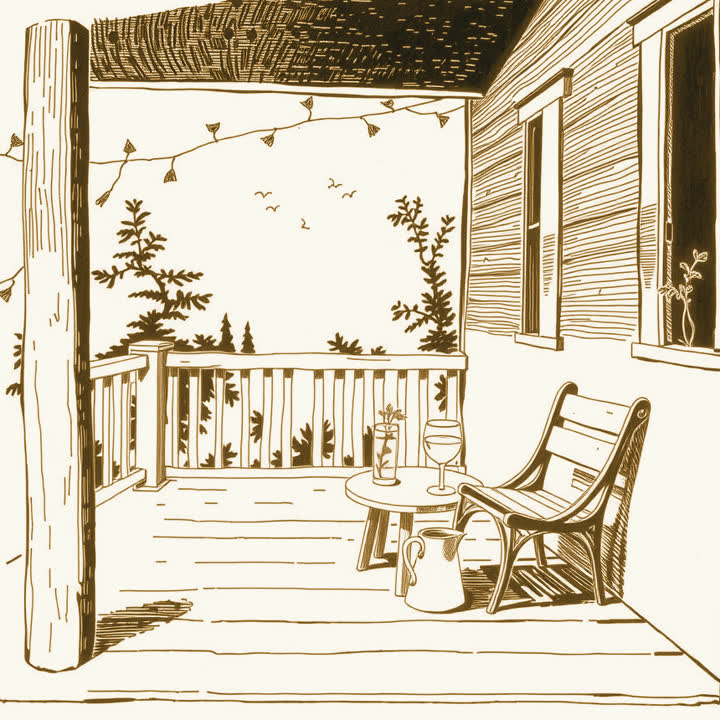
Coleman, Texas, a July afternoon. It is 104 degrees Fahrenheit and the dust is blowing.
A family is on the porch, playing dominoes, drinking lemonade, and it is fine. The father-in-law says, let’s drive to Abilene and have dinner at the cafeteria. Abilene is 53 miles away. The car has no air conditioning. One by one, everyone says, sounds good to me.
Four hours later they are home, sunburnt and full of bad food.
Somebody says, great trip, wasn’t it? Silence. Then, one at a time, the truth comes out. Nobody wanted to go. Each of them had agreed because they thought the others wanted to.
Jerry Harvey told that story in 1974. He called it the Abilene paradox.
Harvey was a professor of management, and the family was his own. A group of people takes an action that none of them wants. Not because they disagree, but because each of them misreads what the others want. Groups manage disagreement all the time. What they cannot manage is agreement.
It is not the same as caving to pressure.
Nobody at that table was pushing. Every person was privately against the trip and publicly for it. They were being polite, and each act of politeness made the next one harder to break. The father-in-law was only making conversation.
You have been on the road to Abilene.
The project everyone privately thinks is doomed, and nobody says so in the meeting. The dinner venue nobody likes that gets booked every year. The merger that both boards approved because each thought the other was keen. The trip costs more the further you go, and the silence gets more expensive with it.
The way off the road is one honest sentence.
I don’t actually want to do this. Does anyone? It feels rude. It is usually a relief. If you lead a group, ask the question before the vote, and ask it privately first. People will tell a notebook things they will not tell a table.
Sources
- The Abilene Paradox: The Management of Agreement, Jerry B. Harvey, 1974. Organizational Dynamics, summer 1974. The family, the cafeteria, and the argument that groups fail at agreement more often than at conflict.
- The Abilene Paradox and Other Meditations on Management, Jerry B. Harvey, 1988. The essay, expanded, in the company of others in the same wry voice.
- Groupthink, Wikipedia. Irving Janis, 1972. The louder cousin, where a group talks itself into a bad decision. Abilene is the quiet version, where nobody talks at all.
Nearby ideas
- The bystander effect. The more people who see a problem, the less each one acts.
- The fundamental attribution error. We blame people’s character and overlook their situation.
- Confirmation bias. We look for evidence that agrees, and rarely test what could say no.
- The Pygmalion effect. What we expect of people quietly shapes what they become.
- Groupthink. How close, loyal teams talk themselves into bad decisions.
- Asch’s conformity experiments. Why people go along with a group they can see is wrong.
- Psychological safety. Teams only learn from the mistakes they feel safe to admit.
- Little’s law. How long things wait depends on how many are already waiting.