Cobra Effect · Decisions and strategy
Hofstadter’s law
It always takes longer than you expect, even when you allow for that.
6 cards, read aloud in 2:25, with a test and sources.
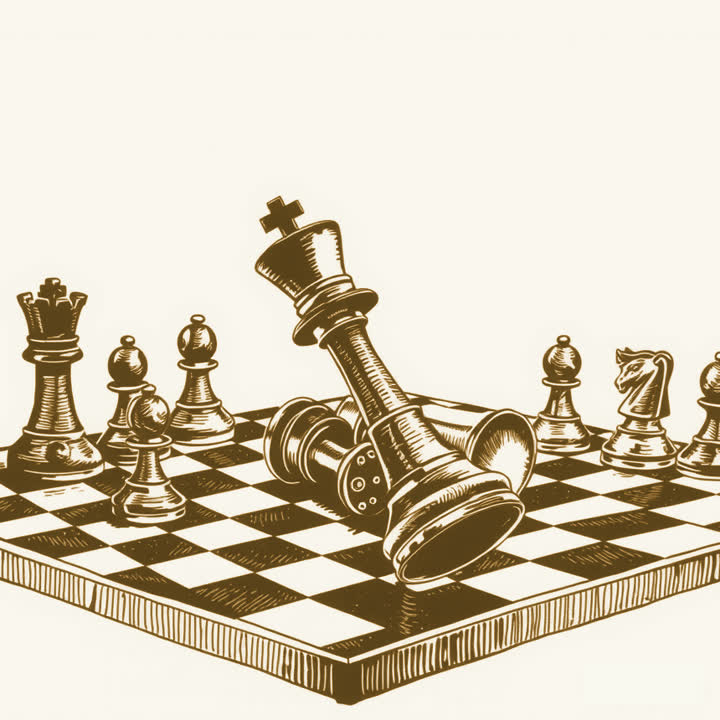
In the 1950s, experts said a computer would beat the chess champion within ten years.
Ten years later it hadn’t happened, and the experts said, give it another ten. And again. Deep Blue beat Garry Kasparov in 1997. Forty years of being a decade away.
Douglas Hofstadter watched this and wrote a law about it.
It appears in his 1979 book, Gödel, Escher, Bach. It always takes longer than you expect, even when you take into account Hofstadter’s law. Read that again. The law refers to itself, and that is the joke, and the joke is the point.
Why the recursion matters.
You estimate a week. You know you are always late, so you say two. But the estimate of how late you will be is itself an estimate, made by the same optimist. You cannot pad your way out. Every layer of padding is made of the same stuff as the guess.
Sydney, 1957. An opera house is costed at three and a half million pounds, to open in 1963.
It opened in 1973. It cost over a hundred million Australian dollars, nearly fifteen times the estimate. Nobody planning it was a fool. They imagined the building going well, because that is what imagining a plan means. The things that go wrong are, by definition, the things you did not imagine.
The way out is to stop looking inward.
Your own plan will always look doable from the inside. So look outward, at the last ten things like it. How long did they actually take, from the first estimate to the day they were done? Use that ratio. Do not adjust it, because your adjustment is the optimist talking.
Then write down your estimate, and the date, and check.
Keep a list of what you guessed and what it took. After ten entries you will have your own ratio, and it will be worse than you think. That is not a character flaw. It is the law. It applies to keeping the list, too.
Sources
- Hofstadter’s law, Wikipedia. The law, its wording, where it appears in the book, and the chess prediction that prompted it.
- Gödel, Escher, Bach, Douglas Hofstadter, 1979. The law is one line in a huge book about self reference, minds and machines. It sits in the discussion of chess programs and why they were so much harder than anyone thought.
- Reference class forecasting, Wikipedia. The outside view worked into a method. Bent Flyvbjerg’s database of large projects, and what their first estimates turned out to be worth.
Nearby ideas
- The planning fallacy. Why projects nearly always take longer than we plan.
- Brooks’s law. Adding people to a late project makes it later.
- Parkinson’s law. Work expands to fill the time you give it.
- Ulysses contracts. Bind your future self before the temptation arrives.
- Zero sum thinking. Most deals are not fixed pies, and treating them as one wastes value.
- Tit for tat. Cooperate first, answer a betrayal once, then forgive.
- BATNA. Your power in a negotiation is what you will do if you walk away.
- Explore and exploit. When to try something new, and when to stick with what works.