Cobra Effect · Famous myths
The tongue map that was never true
How a misread graph put a map of taste zones into school textbooks.
7 cards, read aloud in 2:35, with a test and sources.
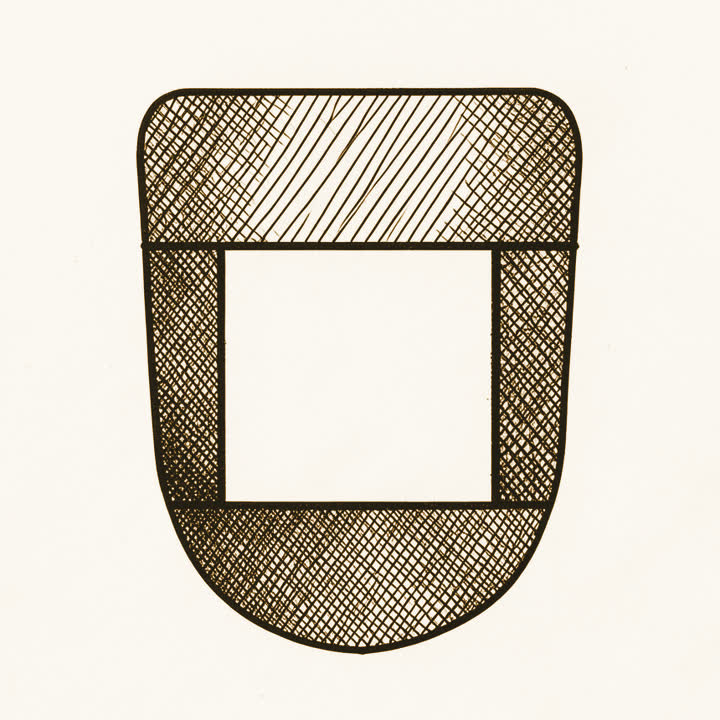
For decades, school textbooks showed a map of the tongue.
Sweet was at the tip, bitter at the back, and sour and salty along the sides. It looked tidy and scientific. It was wrong.
In 1901, the German researcher David Hanig tested tastes around the tongue.
He dripped taste solutions onto the edges of volunteers’ tongues, and measured how strong each had to be before it was noticed. He found that sensitivity varied a little from place to place. He never claimed that each part tasted only one thing.
In 1942, the Harvard psychologist Edwin Boring redrew Hanig’s results as a graph.
The graph showed only relative differences in sensitivity. Readers took its lowest points to mean no sensitivity at all. Textbook illustrators then simplified that into separate zones.
In 1974, Virginia Collings tested the idea again.
She found that all the basic tastes could be detected at every place she tested. Sensitivity did vary somewhat from place to place, just as Hanig had found. The map stayed in many textbooks for years afterwards.
Every part of the tongue can taste every basic taste.
Receptors for sweet, sour, salty, bitter and savoury tastes are found in all the taste areas. The back of the tongue is especially sensitive to bitter, and the sides are somewhat more sensitive overall. So small differences exist, but no part is blind to any basic taste.
The old map also missed a taste entirely.
In 1908, the Japanese chemist Kikunae Ikeda identified a savoury taste in seaweed broth, and called it umami. Western science was slow to accept it as a basic taste. Spiciness, by contrast, is not a taste at all, but a signal of heat and pain.
So when a diagram looks too neat, ask whether it shows the data or someone’s simplification.
Hanig’s small differences were real. A redrawn graph, misread and then simplified, became a map of zones that were never there. You can test it yourself with a few grains of sugar on the back of your tongue.
Sources
- The neat and tidy map of tastes on your tongue you learned in school is all wrong, Smithsonian Magazine. A taste scientist on Hanig, Boring and the evidence.
- How does our sense of taste work?, InformedHealth.org, NCBI Bookshelf. The five basic tastes, taste buds, and why every part of the tongue tastes them.
- Tongue map, Wikipedia. The citations for Hanig, Boring and Collings.
Nearby ideas
- Do we only use ten percent of our brains?. How a vague remark and a book foreword became the ten percent brain myth.
- The learning styles myth. Matching lessons to a preferred style does not improve learning.
- Does old window glass flow downhill?. Why old window panes are uneven, and why it is not because glass flows.
- Did Vikings wear horned helmets?. How horned Viking helmets came from an opera costume designer, not from history.
- Did Einstein fail maths?. How a real exam failure turned into the myth that Einstein failed maths.
- Was Napoleon really short?. How enemy cartoons and French inches made an average man famously short.
- Do goldfish really forget in three seconds?. What experiments show about goldfish memory, and the joke that got it wrong.
- Did tulip mania ruin the Dutch?. What the Dutch archives show about tulip mania, and how the story grew.