Cobra Effect · Famous myths
Do we only use ten percent of our brains?
How a vague remark and a book foreword became the ten percent brain myth.
7 cards, read aloud in 2:33, with a test and sources.
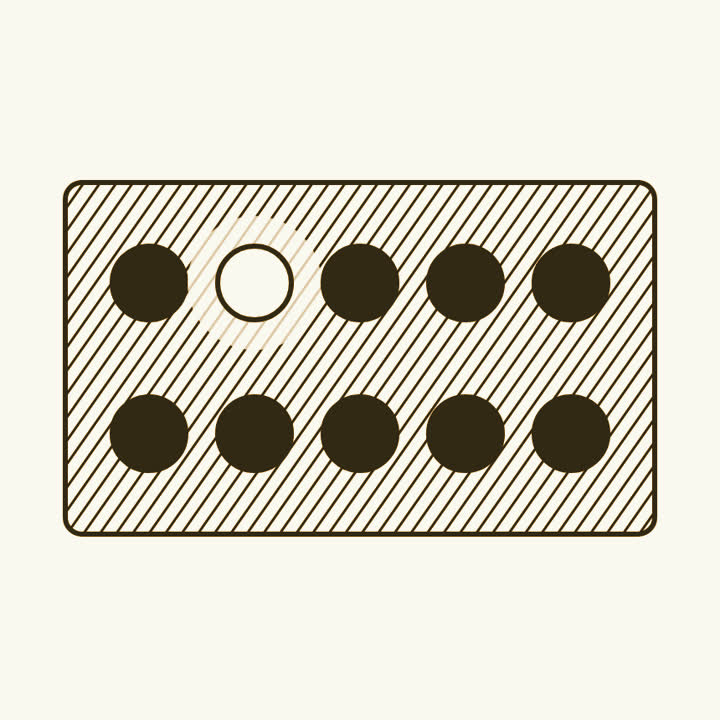
You have probably heard that people use only ten percent of their brains.
It turns up in films, adverts and self help books, usually as a promise of hidden power. The rest, the story goes, lies idle, waiting to be switched on. It is not true, and the way the story spread is a curious one.
In the early 1900s, William James wrote that we use only a small part of our potential.
James was one of the most respected psychologists of his day. He was writing loosely about energy and effort, and he gave no percentage at all. His name, though, gave the idea weight.
In 1936, a foreword to a bestselling self help book turned his idea into a number.
The book was Dale Carnegie’s How to Win Friends and Influence People. In the foreword, the writer Lowell Thomas credited James with saying that people use only ten percent of their mental ability. James had never given that figure. The book sold in enormous numbers, and the number stuck.
Brain scans show activity in every region of the brain over the course of a day.
Different tasks lean on different regions, so not everything is busy at once. But there is no large silent part waiting to be used. Even during sleep, many regions stay active.
Brain injuries tell the same story.
There is almost no part of the brain that can be damaged without some loss of ability. If ninety percent of the brain did nothing, most injuries would do no harm at all. They clearly do.
The brain is also far too costly to leave idle.
It makes up about two percent of the body’s weight, but uses up to about a fifth of its energy. An organ that expensive is unlikely to be mostly unused. A popular rescue, that the idle ninety percent is support cells, is wrong too. There are roughly as many support cells as nerve cells.
So when a number sounds like hidden potential, ask where the number came from.
James described untapped effort, not unused brain tissue. A foreword added a percentage, and put his name on it. You already use all of your brain. What you can improve is how well you use it.
Sources
- Do people only use 10 percent of their brains?, Scientific American. Neurologists on brain scans and the brain’s energy use.
- Do we use only 10 percent of our brains?, Neuroscience for Kids, University of Washington. Where the myth may have come from, and the evidence against it.
- Ten percent of the brain myth, Wikipedia. The trail from William James to the 1936 foreword.
Nearby ideas
- The patient who could only say tan. How one patient's lost speech pointed to a part of the brain with a special job.
- The man who could not make new memories. How one man's lost memory showed that remembering and learning skills are separate.
- The learning styles myth. Matching lessons to a preferred style does not improve learning.
- The tongue map that was never true. How a misread graph put a map of taste zones into school textbooks.
- Does old window glass flow downhill?. Why old window panes are uneven, and why it is not because glass flows.
- Did Vikings wear horned helmets?. How horned Viking helmets came from an opera costume designer, not from history.
- Did Einstein fail maths?. How a real exam failure turned into the myth that Einstein failed maths.
- Was Napoleon really short?. How enemy cartoons and French inches made an average man famously short.