Cobra Effect · Decisions and strategy
The broken window fallacy
Destruction makes visible work and hides the cost of what was lost.
6 cards, read aloud in 2:22, with a test and sources.
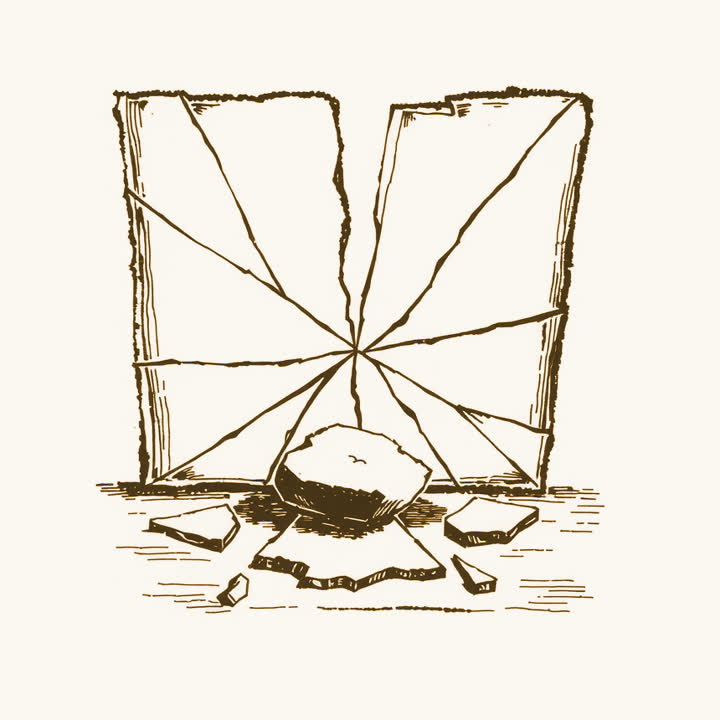
A boy throws a stone through a shop window.
The shopkeeper comes out furious. A crowd gathers, and someone says the comforting thing. Well, it is good for the glazier. Six francs of work he would not otherwise have had. Money goes round. Everyone benefits.
Frédéric Bastiat told that story in 1850.
He was a French economist, and he was tired of hearing it. Yes, the glazier gets six francs. That is what is seen. But the shopkeeper had six francs and a window. Now he has a window. The shoes he would have bought with the six francs are never made. That is what is not seen.
That is the broken window fallacy.
Destruction does not create wealth. It moves spending from one thing to another and leaves the town one window poorer. It is easy to fall for because the glazier is standing right there with his money. The cobbler who lost a sale never knows he lost it. It has nothing to do with the policing theory of the same name. This one is about counting.
It shows up whenever something is destroyed and someone finds the silver lining.
The earthquake that will boost construction. The war that put everyone back to work. The scheme that pays people to scrap working cars and buy new ones. Each one has a real glazier, and a cobbler nobody sees.
Henry Hazlitt turned it into one lesson.
In 1946 he wrote a whole book around Bastiat’s window. The art of economics, he said, is to trace the effects of a policy not just for one group but for all groups, and not just now but later. That is the whole discipline, in a shop doorway.
The question to ask when someone finds the upside of a loss.
Who is the glazier, and who is the cobbler? The glazier is whoever got paid, and he will be in the newspaper. The cobbler is whoever would have been paid instead, and he does not know your name. Count both before you call anything a gain.
Sources
- That Which Is Seen, and That Which Is Not Seen, Frédéric Bastiat, 1850. The essay with the window, the glazier and the six francs. Free translations are online. Search the title with the author.
- Economics in One Lesson, Henry Hazlitt, 1946. Chapter two is the broken window. The rest of the book applies the same seen and unseen test to tariffs, rent control, public works and wars.
- Parable of the broken window, Wikipedia. The story, its later uses, and the argument economists still have about whether disasters ever help an economy.
Nearby ideas
- Second order effects. Every fix has consequences, and those have consequences too.
- The sunk cost fallacy. Money already spent is gone, so it should not steer the next choice.
- Survivorship bias. The failures you never see can reverse the lesson you draw.
- The map is not the territory. Every model leaves something out, and that is where it fails.
- The pre-mortem. Imagine the project has already failed, then ask why, before it starts.
- The prisoner’s dilemma. Why two sensible people can both choose the worst outcome.
- The Overton window. Ideas move from unthinkable to normal before politicians touch them.
- Satisficing. Good enough, chosen quickly, often beats the endless hunt for best.