Cobra Effect · Decisions and strategy
The sunk cost fallacy
Money already spent is gone, so it should not steer the next choice.
5 cards, read aloud in 1:19, with a test and sources.
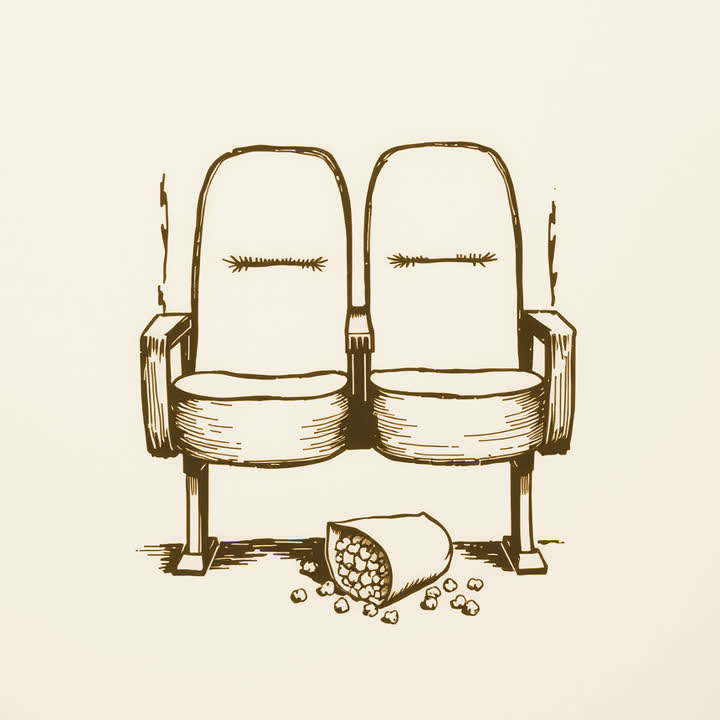
You are forty minutes into a film you don’t like.
You paid for the ticket. So you stay. But the ticket is gone whether you stay or leave. The only thing you can still choose is the next eighty minutes.
A sunk cost is money, time or effort you can’t get back.
Rationally it should not affect what you do next. Emotionally it is the loudest thing in the room. Walking away feels like admitting the spend was a mistake.
Concorde is the textbook case.
Britain and France kept funding the supersonic airliner long after it was clear it would never pay back. Economists still call it the Concorde fallacy.
It runs on a good instinct gone wrong.
Finishing what you start is usually a virtue. The fallacy is finishing because you started, when the reasons for starting are gone.
The question that resets it.
If I were arriving at this fresh today, with no history, would I choose it? If the answer is no, the past is not a reason. It is just a cost you already paid.
Sources
- The Psychology of Sunk Cost, Hal Arkes and Catherine Blumer, 1985. The paper that measured it, in Organizational Behavior and Human Decision Processes. Theatre tickets and a plane project. Search the title with the year. The article summarises the experiments.
- Misbehaving, Richard Thaler, 2015. Thaler’s memoir of building behavioural economics, with a chapter on sunk costs and the people who kept driving through blizzards to games they had paid for.
- Escalation of commitment, Wikipedia. The organisational version: why groups keep funding the failing project, with the Concorde and other cases, and what has been tried to stop it.
Nearby ideas
- Chesterton’s fence. Before removing a rule, find out why it was put there.
- Regression to the mean. Extreme results drift back towards normal, whatever you do.
- Second order effects. Every fix has consequences, and those have consequences too.
- Inversion. To find the path to success, first ask what would guarantee failure.
- The broken window fallacy. Destruction makes visible work and hides the cost of what was lost.
- The map is not the territory. Every model leaves something out, and that is where it fails.
- The pre-mortem. Imagine the project has already failed, then ask why, before it starts.
- The prisoner’s dilemma. Why two sensible people can both choose the worst outcome.