Cobra Effect · Incentives and systems
The Cobra effect
Why paying for a result can breed more of the problem.
7 cards, read aloud in 1:59, with a test and sources.
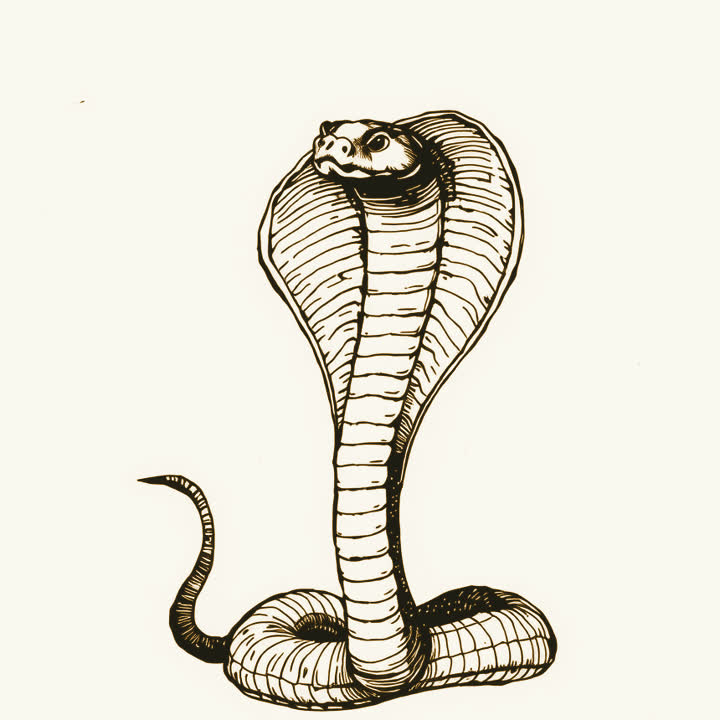
Delhi has a cobra problem. The government has a plan.
Under British rule, so the story goes, the city offers a bounty for every dead cobra. Simple. Measurable. Fair. What could go wrong?
It works. Then it works too well.
Dead cobras pour in. But the snakes in the streets don’t get any fewer. Eventually, somebody asks the obvious question. Where are all these cobras coming from?
People are breeding them.
A cobra is worth money now. So a cobra farm is a business. The bounty didn’t pay for fewer snakes. It paid for snakes.
So the government cancels the bounty.
Now every breeder in the city is holding stock that is suddenly worthless. They let them go. Delhi ends up with more cobras than it started with.
This one is probably a legend. The rat one isn’t.
Hanoi, 1902. The French colonial government paid for rat tails. Tails arrived by the thousand. And the city filled up with tailless rats. People were clipping the tails, and releasing the rats to breed.
The rule underneath. You get what you pay for. Exactly.
An incentive rewards the measure, not the goal. If the measure can be produced without the goal, it will be. That is the Cobra effect.
Where you’ll meet it this week.
Bug bounties that pay per bug. Sales targets that reward sign-ups, and not retention. Any target where the cheapest way to hit the number isn’t the thing you wanted. So ask. What is the cobra farm here?
Sources
- The Great Hanoi Rat Massacre, Michael Vann, 2003. The documented one. Vann found the colonial records of the 1902 rat bounty and the tailless rats. The Wikipedia summary links to his paper in French Colonial History.
- Perverse incentive, Wikipedia. The cobra story, its uncertain origin, and a dozen other bounties that went the same way.
- Freakonomics, Levitt and Dubner, 2005. Chapter one is incentives and how people bend to them, told through sumo wrestlers and teachers. The popular starting point.
Nearby ideas
- Goodhart’s law. A measure turned into a target stops telling you the truth.
- Second order effects. Every fix has consequences, and those have consequences too.
- What you measure is what you get. Why the number you chase quietly replaces the thing you wanted.
- The tragedy of the commons. Why shared things get used up, and how communities stop it.
- Moral hazard. Shield people from a risk and they take more of it.
- The Jevons paradox. Why making something efficient can make us use more of it.
- Braess’s paradox. Why adding a road can make everyone’s journey slower.
- Path dependence. Why early choices stay locked in long after better ones appear.