Cobra Effect · People and organisations
Psychological safety
Teams only learn from the mistakes they feel safe to admit.
7 cards, read aloud in 3:10, with a test and sources.
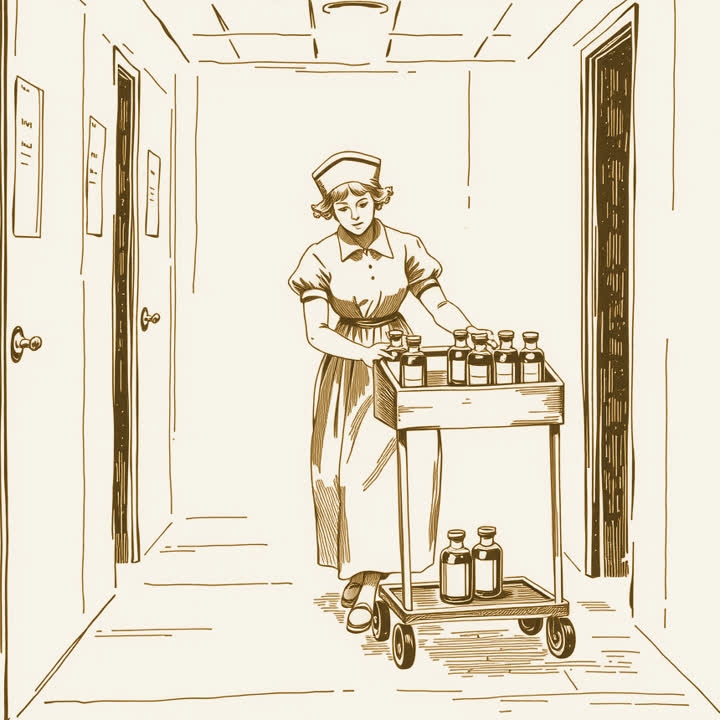
1996. The best hospital teams seem to make the most mistakes.
Amy Edmondson is a doctoral student studying medication errors on hospital wards. She expects the best run teams to report the fewest. The data says the opposite. The teams that rate themselves best report the most errors. For a while she thinks her study has failed.
Then she asks a different question.
Were the good teams making more mistakes, or admitting more? A second researcher visited the wards without knowing the numbers. On the best teams, people talked openly about errors and how to catch them. On the worst, a nurse who reported a mistake got blamed for it. So nobody did. The good teams weren’t sloppier. They were honest.
In 1999 she gave it a name. Psychological safety.
A shared belief that the team is a safe place to take a risk with other people. To say I don’t know. To say I think this is wrong. To say I made a mistake. Not niceness. Not comfort. The best teams argue hard. Safety is knowing the argument won’t cost you your standing.
Google went looking for what makes a great team. It found her.
Between 2012 and 2015, a project called Aristotle studied 180 of Google’s teams. It expected the answer to be who was on the team. The mix of skills, the star performers. It wasn’t. Who was on the team mattered far less than how the team behaved. The single strongest factor was whether people felt safe to speak.
The cost of its absence is measured in wreckage.
Tenerife, 1977. The deadliest accident in the history of aviation. The flight engineer of a KLM jumbo jet, hearing the captain begin the take off, asked whether the other plane was clear of the runway. The captain, the airline’s head of flight training, said yes. The engineer did not ask again.
It is built by the person with the most power in the room.
Edmondson’s later work is about how. Frame the work as uncertain, so questions are expected. Admit your own mistakes first, so others can afford to. And when someone brings bad news, thank them before you do anything else. The first reaction to bad news teaches everyone what to do with the next piece.
The test is a question about last week.
When did someone junior to you tell you that you were wrong? If you can’t remember, it isn’t because you weren’t. It is because they have learned what it costs. Safety isn’t what you say about your team. It is what happens to the next person who speaks.
Sources
- Psychological safety, Wikipedia. Edmondson’s 1999 definition, the earlier hospital study, Google’s Project Aristotle, and what the research since says about building it.
- The Fearless Organization, Amy Edmondson, 2018. Edmondson’s own book. The hospital study told in full, the crashes and scandals that silence caused, and a practical last third on what leaders can do.
- What Google Learned From Its Quest to Build the Perfect Team, Charles Duhigg, The New York Times Magazine, 2016. The article that made Project Aristotle famous. How Google studied 180 teams and why the answer was not who was on them. Behind a paywall for some readers.
Nearby ideas
- Groupthink. How close, loyal teams talk themselves into bad decisions.
- Asch’s conformity experiments. Why people go along with a group they can see is wrong.
- The Abilene paradox. How a group can agree to something that nobody wants.
- Little’s law. How long things wait depends on how many are already waiting.
- The Ringelmann effect. The bigger the group, the less effort each person puts in.
- Milgram’s obedience experiments. Ordinary people follow harmful orders when the setting pushes them.
- Pluralistic ignorance. Everyone can privately doubt a rule that nobody questions out loud.
- Gall’s law. Complex systems that work grow out of simple ones that worked.