Cobra Effect · Learning and memory
The illusion of competence
Feeling familiar with material is not the same as knowing it.
6 cards, read aloud in 2:18, with a test and sources.
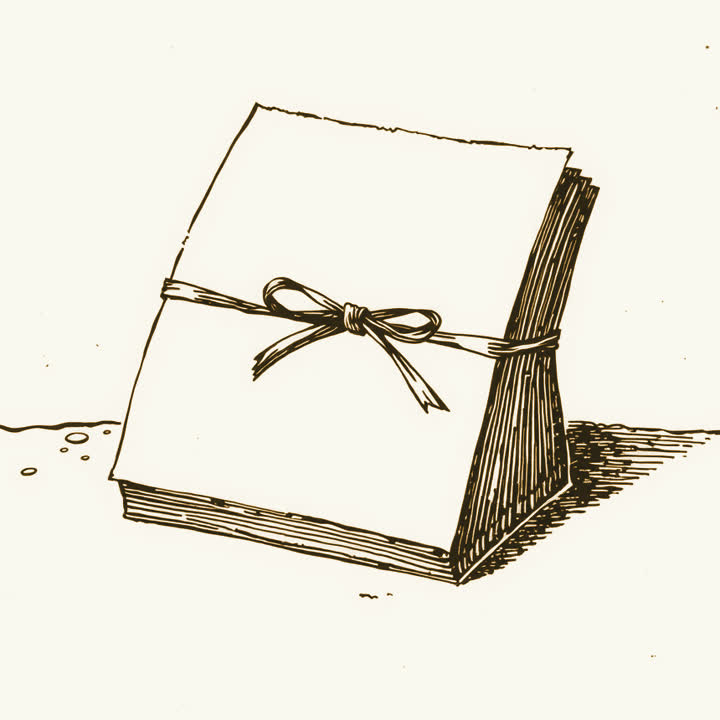
The night before the exam, the notes look beautiful.
Three colours of highlighter. Every page read twice, some of them three times. It all makes sense. None of it is surprising any more. Tomorrow, half of it will be gone.
Smooth is not the same as known.
Reading something again makes it easier to read. That is all it reliably does. Your mind reads that ease and reports it back to you as knowledge. Robert Bjork and Elizabeth Bjork spent decades showing how badly people judge their own learning. We trust how it feels while we are still looking at it.
In 2006 two psychologists ran the comparison.
Henry Roediger and Jeffrey Karpicke had students learn passages, some by rereading and some by trying to recall. The rereaders were confident. They predicted they would remember more. A week later they remembered less. Confidence and recall were pointing in opposite directions.
This is the illusion of competence.
Fluency is how easily something comes to mind while the answer is in front of you. Knowledge is whether it comes back once the answer is gone. Highlighting, rereading and watching someone else solve it build fluency and very little else. They feel like work, because they take time.
In 2013 a review ranked the popular study habits.
John Dunlosky and colleagues went through ten common techniques and the evidence behind each one. Highlighting and rereading came out near the bottom. Practice testing and spreading study across days came out on top. The habits that felt best did the least.
So close the book and find out what is actually in there.
Before you reread a page, write down what you think is on it. From memory, on a blank sheet. The gaps are the lesson. They are the parts you would have highlighted and forgotten. If studying feels comfortable, you are probably just admiring your notes.
Sources
- Improving Students’ Learning With Effective Learning Techniques, John Dunlosky and colleagues, 2013. Ten study habits rated against the evidence. Highlighting and rereading near the bottom, practice testing near the top. Long, but the summary table earns its keep.
- Make It Stick, Peter C. Brown, Henry L. Roediger III and Mark A. McDaniel, 2014. The readable account of this research, written with two of the psychologists who ran it. The chapter on illusions of knowing is the one to start with.
- Bjork Learning and Forgetting Lab, University of California, Los Angeles. The lab pages on why conditions that feel worst while you are learning often produce the best memory afterwards.
Nearby ideas
- The illusion of explanatory depth. We think we know how things work until we try to explain them.
- The testing effect. Pulling an answer from memory teaches more than reading it again.
- Desirable difficulties. The practice that feels hardest is often the practice that sticks.
- The generation effect. Trying to produce an answer first makes it stick, even when you are wrong.
- The learning styles myth. Matching lessons to a preferred style does not improve learning.
- Sleep and consolidation. Sleep is when the day’s learning gets filed away.
- The spacing effect. Spread your study out over time and it lasts far longer.
- Interleaving. Mixing problem types feels worse and teaches better.