Cobra Effect · Thinking and evidence
The illusion of explanatory depth
We think we know how things work until we try to explain them.
6 cards, read aloud in 2:22, with a test and sources.
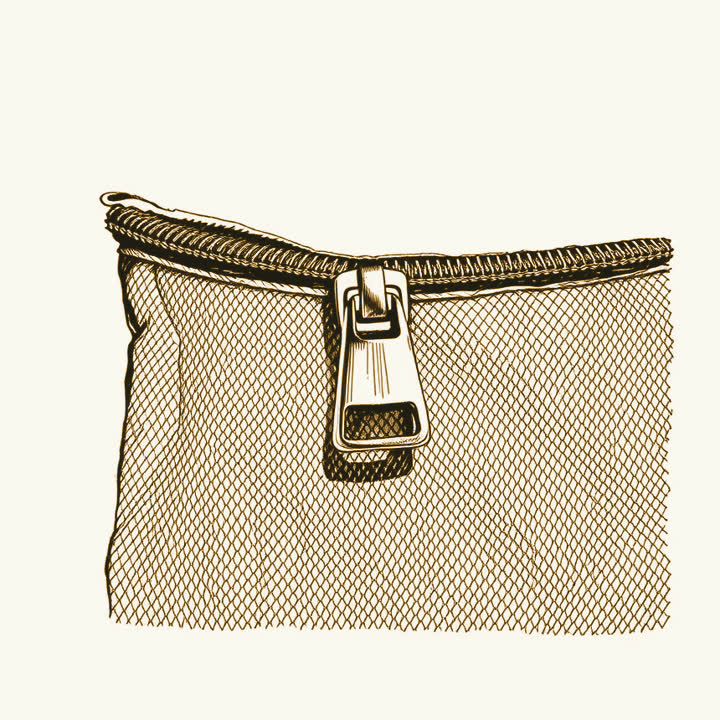
How well do you understand a zip? Rate yourself out of seven.
Most people rate themselves near the top. It’s a zip. You have used one every day of your life. Now explain, step by step, how the teeth lock and why the slider unlocks them. Take your time.
Yale, 2002. Leonid Rozenblit and Frank Keil ask exactly that.
They have people rate their understanding of everyday things. A zip. A flush toilet. A cylinder lock. A helicopter. Then they ask for a full written explanation. Then they ask for the rating again. It drops. Every time.
They called it the illusion of explanatory depth.
We mistake being familiar with a thing for understanding it. We know what a toilet does. We know the lever goes down and the water comes. The bit in between feels known because nobody ever asked us for it. The explanation is the test, and the test fails.
Try drawing a bicycle.
In 2006, Rebecca Lawson at Liverpool asked people to draw where the frame, pedals and chain go. Many drew bicycles that could not turn or could not be pedalled. Nearly everyone had been sure they could. Familiarity breeds the feeling of knowledge, not the knowledge.
It gets political.
In 2013, Philip Fernbach and colleagues asked people how well they understood policies they held strong views on. Then they asked them to explain how the policy would actually work, step by step. Their confidence fell, and so did the strength of their position. Asking for reasons instead of explanations did nothing. Reasons are cheap. Mechanisms are not.
The cure is to explain it before you decide it.
Pick the thing you are sure about. Write out how it works, start to finish, as if for a child. Mark the spot where the writing goes vague. That spot is the edge of what you know, and it is usually much closer than you thought. Now you can go and learn the bit that matters.
Sources
- Illusion of explanatory depth, Wikipedia. The 2002 study and what came after it. Search for The misunderstood limits of folk science by Rozenblit and Keil for the original paper, which is free to read.
- The Knowledge Illusion, Steven Sloman and Philip Fernbach, 2017. Two of the researchers on why we never think alone, how little any one of us holds, and why that mostly works. This page is the article on the illusion. Search the book title to find it.
- Overconfidence effect, Wikipedia. The wider family: how confidence and accuracy come apart, and the experiments that measure the gap.
Nearby ideas
- The Dunning Kruger effect. Why the least skilled are often the worst judges of their skill.
- The Feynman technique. If you cannot explain it simply, you have found a gap.
- The curse of knowledge. Once you know something, you cannot see what a beginner is missing.
- Gell-Mann amnesia. We spot the errors in our own field, then trust everything else.
- The decoy effect. A worse option added to a menu can steer what you choose.
- The endowment effect. We value things more simply because they are ours.
- Inattentional blindness. Focus hard enough and you miss what is right in front of you.
- Post hoc ergo propter hoc. Coming first does not mean causing what came after.