Cobra Effect · Decisions and strategy
The Pareto principle
A few causes usually produce most of the results.
7 cards, read aloud in 2:19, with a test and sources.
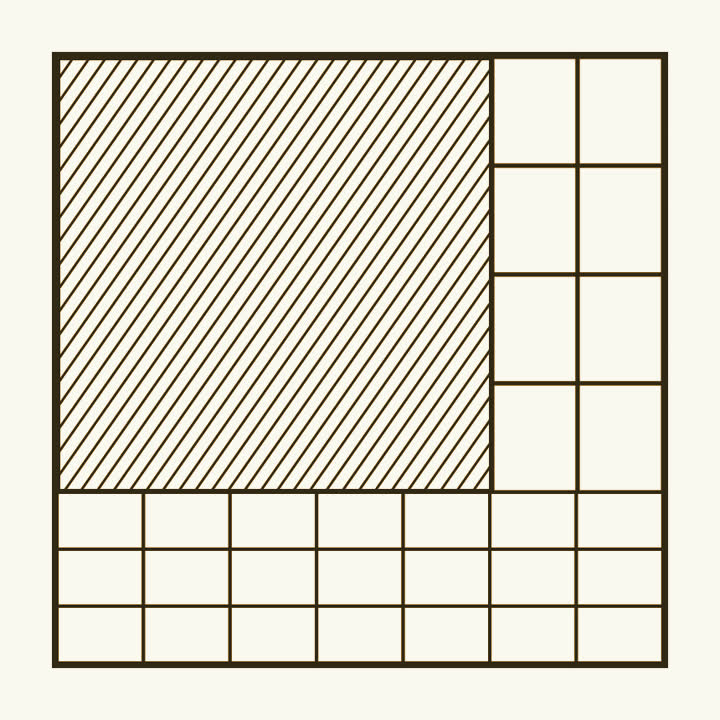
Italy, 1896. An economist is counting up who owns the land.
Vilfredo Pareto works through the records and finds ownership badly lopsided. A small share of the people holds most of the land. Then he looks at other countries and other centuries and keeps finding the same lopsided shape.
The shape turns up almost everywhere anybody measures.
A few customers bring in most of the revenue. A few faults cause most of the complaints. A few words make up most of what anyone actually says. It is not a rule of nature. It is the shape unequal things tend to fall into.
The 1940s. An engineer gives the shape a name and a use.
Joseph Juran was working on quality control and kept finding that most defects traced back to a few causes. He called those the vital few, and everything else the trivial many. He named the idea after Pareto.
He came to regret half of that phrase.
Juran said later that he should have called the rest the useful many. Trivial makes it sound safe to drop, and it rarely is. The vital few deserve your attention first. The rest still has to happen.
And the numbers do not have to be eighty and twenty.
People say 80/20 because it is memorable. Real splits run from mild to savage, and the two numbers need not add up to a hundred. The claim is only this. Effort and result are rarely spread evenly.
The use of it is triage, not arithmetic.
Do not go hunting for the exact ratio. Sort your work by how much it actually produced, and notice how fast the list falls away. Then defend the top of that list from everything below it.
One question, once a month.
Which few things here produced most of the result? And what am I still doing purely out of habit? Most people find the answer uncomfortable, which is a good sign that it was worth asking.
Sources
- Pareto principle, Wikipedia. Pareto’s observation about Italian land, Juran naming it after him, and the many places the lopsided shape has since been measured.
- Quality Control Handbook, Joseph M. Juran. The engineer who named the idea and later regretted calling the rest trivial. This page covers his career and the handbook that carried the thinking into industry.
- Pareto distribution, Wikipedia. The mathematics behind the shape, why the two numbers need not add up to a hundred, and how lopsided a real distribution can get.
Nearby ideas
- Mean and median. Why the average can describe nobody at all.
- The Eisenhower matrix. Urgent things crowd out important ones unless you protect them.
- Satisficing. Good enough, chosen quickly, often beats the endless hunt for best.
- Hofstadter’s law. It always takes longer than you expect, even when you allow for that.
- Ulysses contracts. Bind your future self before the temptation arrives.
- Zero sum thinking. Most deals are not fixed pies, and treating them as one wastes value.
- Tit for tat. Cooperate first, answer a betrayal once, then forgive.
- BATNA. Your power in a negotiation is what you will do if you walk away.