Cobra Effect · The brain
The man who could not make new memories
How one man's lost memory showed that remembering and learning skills are separate.
7 cards, read aloud in 2:47, with a test and sources.
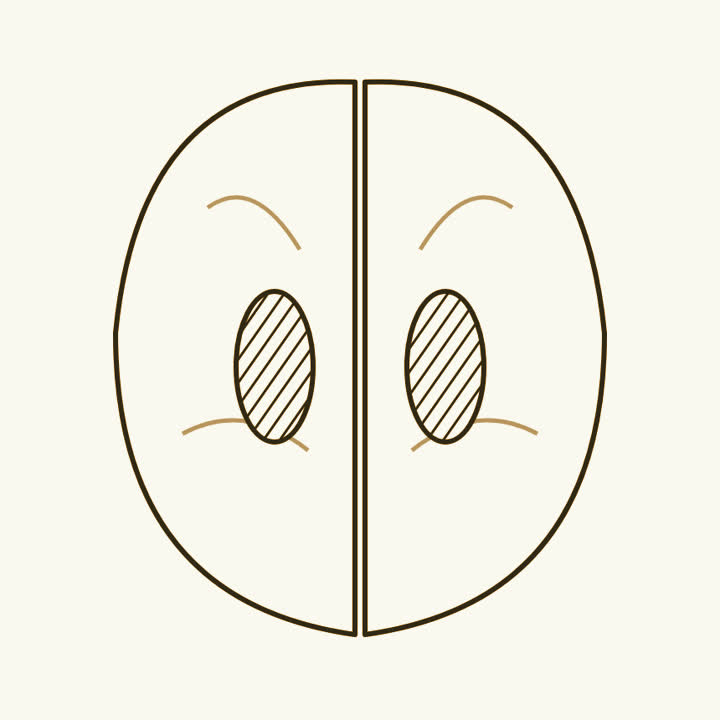
In 1953, Henry Molaison had brain surgery to stop his seizures.
He had suffered seizures since childhood, and by his twenties medicines could no longer control them. He was twenty seven. At Hartford Hospital in Connecticut, the surgeon William Scoville removed tissue from deep inside both sides of his brain. The operation was experimental.
His seizures became much less severe, but something else was lost.
He could no longer form lasting new memories of facts and events. He could hold a conversation, then minutes later forget it had happened. He also lost some memories from the years just before the operation. His intelligence, his language and his personality stayed largely intact.
In 1957, Scoville and the psychologist Brenda Milner described what had happened.
They compared him with other patients who had had similar operations. Severe memory loss appeared only when a structure called the hippocampus, and the area around it, had been removed on both sides. To protect his privacy, he was known in research only as H. M.
Then Milner asked him to trace a star while watching his hand only in a mirror.
Mirror drawing is hard at first, and gets easier with practice. Over several days, his tracing improved steadily. Yet each time, he had no memory of ever having done the task. Learning a skill, it turned out, relies on different memory systems from remembering events.
For decades, he took part in research that changed how memory is understood.
The neuroscientist Suzanne Corkin worked with him for much of his life. Brain scans in the 1990s showed his damage was smaller than the surgeon had estimated. Part of each hippocampus had survived.
Henry Molaison died in 2008, aged eighty two.
Only then was his full name made public. His brain was preserved, then cut into two thousand four hundred and one thin slices. Each slice was photographed in fine detail, so researchers anywhere could study it.
So when one ability vanishes and another survives, ask if they rely on different systems.
Henry lost the ability to remember new events, but not to learn new skills. That split showed that memory is not one thing, but several. Some of the most important discoveries come from noticing carefully what is left.
Sources
- The Curious Case of Patient H.M., BrainFacts.org, Society for Neuroscience. What Henry Molaison taught scientists about memory.
- Loss of recent memory after bilateral hippocampal lesions, Scoville and Milner, 1957. The original report on H. M. and the other patients.
- Postmortem examination of patient H.M.’s brain, Nature Communications, 2014. How his brain was cut into thousands of slices and studied.
Nearby ideas
- The patient who could only say tan. How one patient's lost speech pointed to a part of the brain with a special job.
- The patients with a divided brain. What patients with a divided brain revealed, and the myth it was stretched into.
- The cells that see edges. How an accident with a glass slide revealed brain cells that detect edges.
- The taxi drivers whose brains changed. How London's taxi drivers showed that intense learning can reshape the adult brain.
- Is the brain one net or many cells?. How a black stain and a famous feud revealed that the brain is made of separate cells.