Cobra Effect · Human origins
The ancient people known from a finger bone
How a tiny finger bone revealed a whole branch of the human family.
7 cards, read aloud in 2:36, with a test and sources.
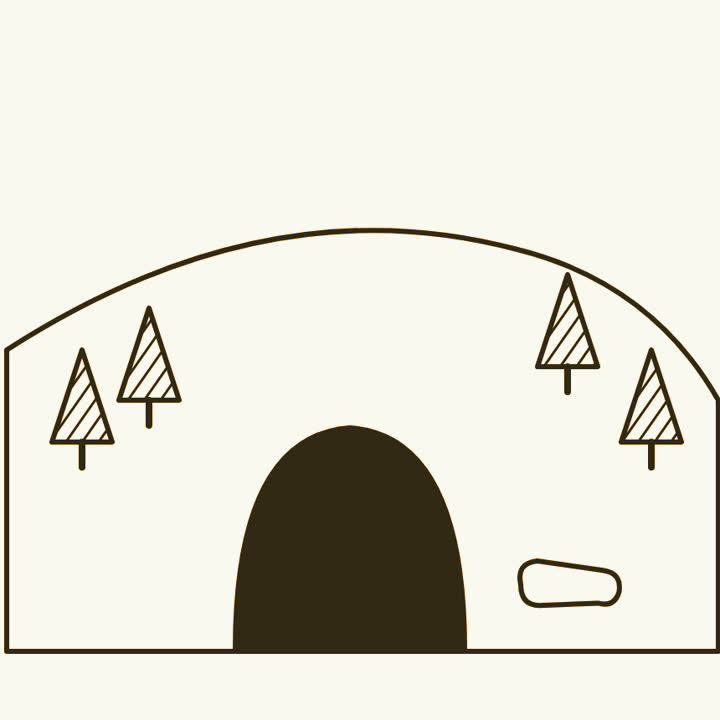
In 2008, Russian scientists dug up a tiny finger bone in Denisova Cave, in Siberia.
The cave lies in the Altai Mountains, in southern Siberia. The bone came from a young girl. It was far too small to tell what kind of human she had been.
In 2010, DNA from the bone revealed a group no one had known about.
First, her mitochondrial DNA turned out to be unlike that of both modern humans and Neanderthals. Later that year, her full genome showed her people were close relatives of the Neanderthals. They were named Denisovans, after the cave.
They were the first ancient human group identified from DNA, rather than from their bones.
At first, scientists had almost no idea what Denisovans looked like. Only a few teeth and fragments of bone had been found. Their genes told a much richer story than their fossils.
Many people today carry Denisovan DNA.
The share is highest in people from New Guinea and nearby islands, up to about five percent. Smaller amounts are found across mainland Asia. Most Tibetans carry a version of a gene that helps at high altitude, inherited from Denisovans or close relatives of theirs.
In 2018, a bone from the same cave revealed a remarkable family.
It belonged to a girl at least thirteen years old. Her mother was a Neanderthal, and her father was a Denisovan. She was the first known child of parents from two different ancient human groups.
Denisovan fossils have since turned up far from Siberia.
A jawbone from a cave on the Tibetan Plateau was identified in 2019, using ancient proteins. A jaw dredged from the sea off Taiwan was identified in 2025. Also in 2025, two studies linked a large ancient skull from Harbin, in China, to Denisovans, though some researchers still debate it.
So when evidence is tiny, ask how much it can still reveal.
A fragment of finger bone uncovered a whole branch of the human family. DNA and proteins can speak when bones alone are silent. Some of the biggest discoveries start from the smallest clues.
Sources
- Denisovans, UC Santa Cruz News, 2010. How the genome revealed a new group of ancient humans.
- Neanderthal mother, Denisovan father!, ScienceDaily, 2018. The girl with parents from two ancient groups.
- The first Denisovan skull may have been found, Science News, 2025. The Harbin skull, and why some researchers remain cautious.
Nearby ideas
- The Neanderthal inside us. How ancient DNA revealed that many living people carry a little Neanderthal in them.
- The mother of all our mothers. What the woman nicknamed Mitochondrial Eve really was, and what the name got wrong.
- The small humans of Flores. How a tiny skeleton on an Indonesian island turned out to be a distinct human species.
- Lucy, the ancestor who walked upright. How a skeleton from Ethiopia showed that walking upright came before big brains.
- Footprints in volcanic ash. How footprints in ancient ash captured upright walkers, and what they cannot tell us.
- The fossil that fooled experts for forty years. How a forged skull fooled many experts, and how it was finally exposed.