Cobra Effect · Thinking and evidence
Gell-Mann amnesia
We spot the errors in our own field, then trust everything else.
6 cards, read aloud in 1:59, with a test and sources.
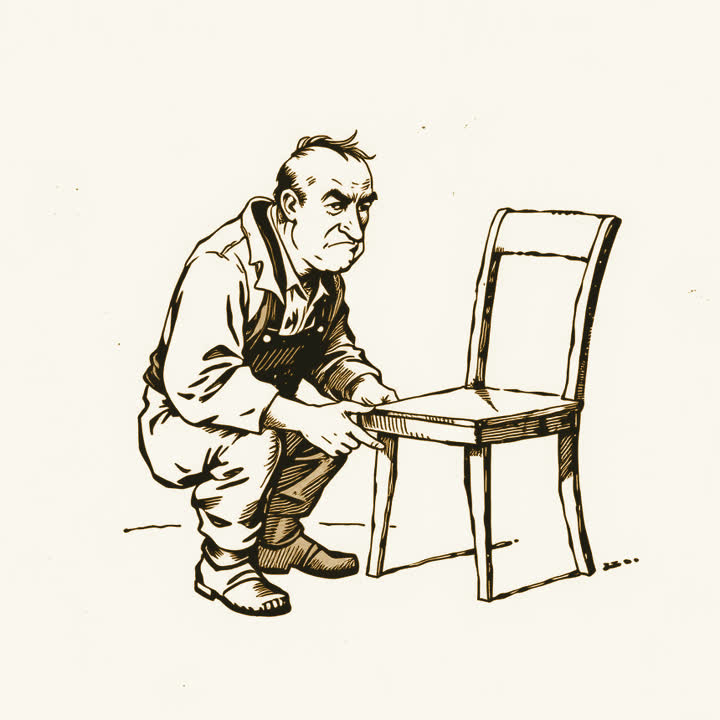
You open the paper and read an article about your own trade.
It gets the basics wrong. The expert quoted is not an expert. Two of the numbers are the wrong way round. You put it down, mildly annoyed, and turn the page.
The next page is about national politics. You believe every line of it.
You have already forgotten what just happened. Same paper. Same reporters. Same deadline. Somehow the errors were confined to the one subject you happen to know about.
Michael Crichton gave this a name in 2002.
The novelist described it in a talk called Why Speculate. He called it Gell-Mann amnesia, after the physicist Murray Gell-Mann. He admitted the name was a joke at his own expense. Dropping a famous name made the idea sound more important than it was.
The reason it happens is simple and uncomfortable.
Knowledge is the only instrument that lets you see an error. On every other page you have no way to spot one, so the page looks clean. A clean page feels like a correct page. It is only a page you cannot check.
Crichton had a phrase for the commonest kind of error.
Wet streets cause rain. When an article in your own field gets cause and consequence the wrong way round, you laugh at it. The same mistake sails straight past you everywhere else, because you do not know which way round it should be.
The answer is not to stop reading. It is to keep score.
Next time you read something about work you know, notice exactly how wrong it was. Then apply that rate to everything else you read that day. Trust a source on the subjects where you have actually checked it, and hold the rest loosely.
Sources
- Michael Crichton, Wikipedia. The novelist who coined the term. Search the page for Gell-Mann amnesia, and search online for his 2002 talk Why Speculate, where he first set it out.
- Bad Science, Ben Goldacre, 2008. A doctor going through health reporting story by story and showing what happens between the study and the headline. The long form of the same complaint.
- Murray Gell-Mann, Wikipedia. The physicist whose name is on it. He had nothing to do with the idea, which Crichton cheerfully admitted was the point of borrowing the name.
Nearby ideas
- The illusion of explanatory depth. We think we know how things work until we try to explain them.
- The halo effect. One good quality colours how we judge all the others.
- Confirmation bias. We look for evidence that agrees, and rarely test what could say no.
- The decoy effect. A worse option added to a menu can steer what you choose.
- The endowment effect. We value things more simply because they are ours.
- Inattentional blindness. Focus hard enough and you miss what is right in front of you.
- Post hoc ergo propter hoc. Coming first does not mean causing what came after.
- Correlation is not causation. Two things moving together may share a hidden cause.