Cobra Effect · Thinking and evidence
Post hoc ergo propter hoc
Coming first does not mean causing what came after.
6 cards, read aloud in 1:52, with a test and sources.
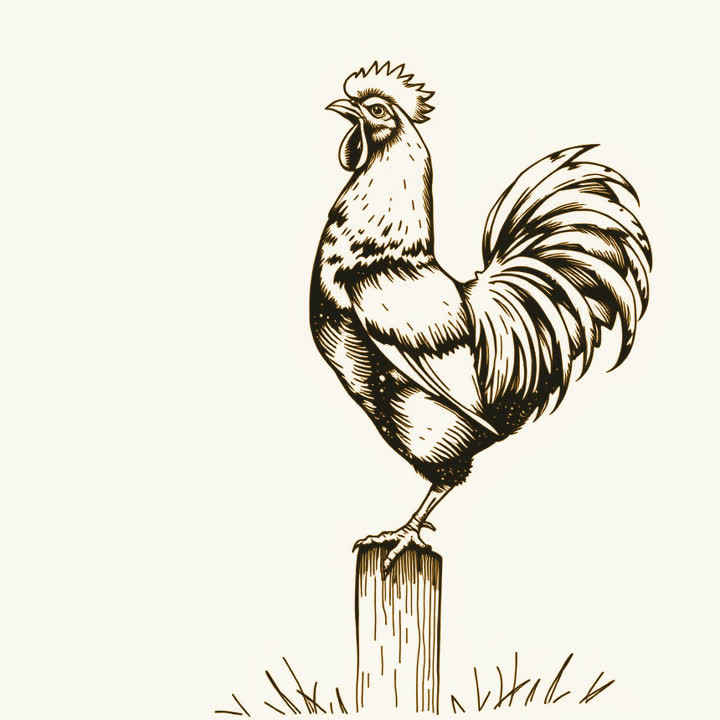
The rooster crows. The sun comes up. Every single morning.
Watch it a thousand times and never once out of order. The bird calls, the light arrives. If nobody had ever told you otherwise, what would you conclude?
Take the rooster away and the sun still comes up.
The sequence was real. The cause was somewhere else entirely. Both events run off the same clock, and the clock belongs to the earth. The rooster was a witness, not a reason.
Latin gave the mistake a name. After this, therefore because of this.
Post hoc ergo propter hoc. It is the belief that because one thing followed another, the first one caused the second. Order is a clue. It is not a cause.
You take the remedy on Thursday. By Sunday you feel fine.
So the remedy worked. Except most coughs and colds clear up on their own in about a week. You would have felt fine on Sunday either way. The cure arrived just in time to take the credit.
This is why we are so easy to sell to.
Anything sold for a problem that usually passes collects a queue of grateful customers. The stomach settles. The back stops aching. The bad quarter ends. Whoever acted last gets the letter of thanks.
Three questions that break the spell.
What else changed at the same time? How often does this get better with nothing done at all? Can you make it happen again on purpose? If the last answer is no, you have a story, not a cause.
Sources
- Post hoc ergo propter hoc, Wikipedia. The name, the rooster, and the difference between a sequence and a cause, with the related mistakes it gets confused with.
- The Demon-Haunted World, Carl Sagan, 1995. Sagan’s toolkit for testing claims, written for people who are not scientists. The chapter on detecting nonsense is the one to read first.
- Spontaneous remission, Wikipedia. Why so many complaints improve with nothing done at all, which is the quiet reason so many remedies look like they worked.
Nearby ideas
- Correlation is not causation. Two things moving together may share a hidden cause.
- The narrative fallacy. We invent causes for events because stories feel like explanations.
- The Texas sharpshooter fallacy. Draw the target after the shots and any pattern looks meaningful.
- Steelmanning. Argue against the strongest version of a view, not the weakest.
- Choice overload. Too many options that are hard to compare can stop people choosing.
- The razors. Simple rules for cutting away explanations you do not need.
- Survivorship bias. The failures you never see can reverse the lesson you draw.
- The Dunning Kruger effect. Why the least skilled are often the worst judges of their skill.