Cobra Effect · Thinking and evidence
The endowment effect
We value things more simply because they are ours.
6 cards, read aloud in 2:21, with a test and sources.
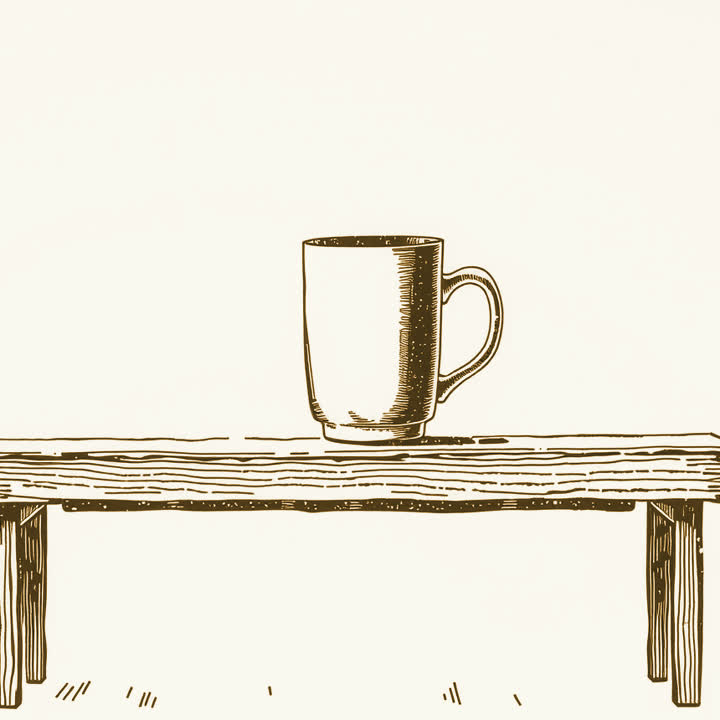
Cornell, 1990. Half the class is handed a coffee mug.
Daniel Kahneman, Jack Knetsch and Richard Thaler give out mugs from the university shop, worth about $6, to every second seat. Then they open a market. Mug owners can sell. The others can buy. Economics says about half the mugs should change hands.
Almost nothing changes hands.
Owners won’t sell for less than about $5. Buyers won’t pay more than about $2. Same mug. Same students. Same afternoon. The only difference is who was holding it when the market opened.
That is the endowment effect.
Owning a thing raises what you think it is worth. Thaler named it in 1980, after an economist friend who had bought good wine for about $5 a bottle. Years later a merchant offered him $100 a bottle. He refused. He had never in his life paid more than $35 for a bottle of wine.
It runs on a lopsided sense of loss.
Giving something up hurts more than getting the same thing pleases. So the seller is pricing a loss and the buyer is pricing a gain, and the loss is always dearer. Knetsch found it with chocolate too. Given a mug or a bar, about nine in ten kept whatever they got.
Shops know. So does anyone who has tried to sell a house.
Free trials, money back guarantees, the car you take home for the weekend. Once it is yours, giving it back is a loss. And the couple who have lived in a house for twenty years are sure it is worth more than anyone will pay. Dealers are largely immune. Trade a thing every day and it stops feeling like yours.
The test is a question you ask the mirror.
If I didn’t already own this, would I buy it today at this price? If the answer is no, the price you are holding out for is not the price. It is the pain of letting go, with a dollar sign in front of it.
Sources
- Experimental Tests of the Endowment Effect and the Coase Theorem, Daniel Kahneman, Jack Knetsch and Richard Thaler, 1990. The mug experiments, in the Journal of Political Economy. Search the title for a free copy. The tables show how few mugs moved.
- Misbehaving, Richard Thaler, 2015. Thaler’s own account of how the mugs, the wine and the rest of behavioural economics came about, told as a memoir. Funny, and honest about the fights.
- Loss aversion, Wikipedia. The lopsided sense of loss underneath the mugs. What has been measured, what has been argued about, and where the size of the gap is disputed.
Nearby ideas
- Loss aversion. Losing something hurts about twice as much as gaining it pleases.
- The sunk cost fallacy. Money already spent is gone, so it should not steer the next choice.
- The framing effect. The same facts, worded differently, lead to different choices.
- Inattentional blindness. Focus hard enough and you miss what is right in front of you.
- Post hoc ergo propter hoc. Coming first does not mean causing what came after.
- Correlation is not causation. Two things moving together may share a hidden cause.
- Steelmanning. Argue against the strongest version of a view, not the weakest.
- Choice overload. Too many options that are hard to compare can stop people choosing.