Cobra Effect · Thinking and evidence
Motivated reasoning
We set a lower bar for evidence we want to believe.
6 cards, read aloud in 2:31, with a test and sources.
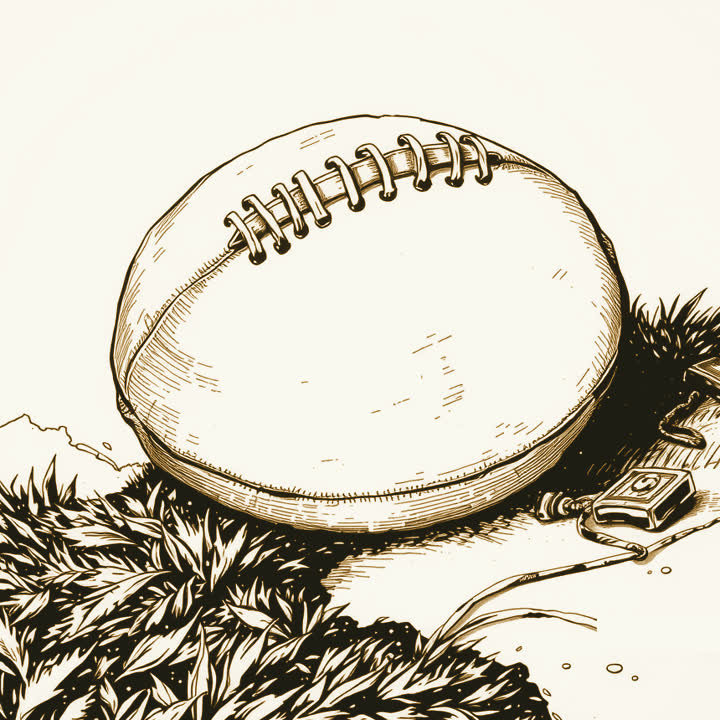
Princeton and Dartmouth play football. Both sides watch the same game.
November 1951. It is a rough match. Princeton’s star player leaves with a broken nose. A Dartmouth player breaks his leg. Afterwards, each campus is certain the other side started it.
Two psychologists show students the film and ask them to count the fouls.
Albert Hastorf and Hadley Cantril published the study in 1954. They called it They Saw a Game. Princeton students saw Dartmouth commit about twice as many fouls as Dartmouth students saw. Same film. Same rules. Different game. Nobody was lying. Each side saw what it wanted to see.
That is motivated reasoning. We reason like lawyers, not judges.
Ziva Kunda set out the evidence in 1990. A judge weighs the case and then decides. A lawyer starts with the verdict and hunts for evidence to support it. As Tom Gilovich put it, when we want a conclusion we ask, can I believe this? When we don’t, we ask, must I believe this? The bar moves with the wish.
Kunda’s own test used coffee.
In 1987 she gave people an article claiming caffeine was linked to a disease that affects women. Women who drank a lot of coffee found the article much less convincing than women who drank little. Men, who had nothing at stake, were not moved either way. The evidence hadn’t changed. The cost of believing it had.
It isn’t stupidity. It has a limit, and the limit is deniability.
Kunda’s key finding is that people don’t believe just anything they want. They believe what they can build a case for. So the smarter you are, the better the case you can build, and the more surely you fool yourself. Intelligence is not a defence. It is a better lawyer.
The test that catches it.
Notice which question you are asking. Can I believe this, or must I? Then ask the other one. If you would accept this evidence from your own side, accept it from theirs. And when a fact makes you happy, that is the moment to check it twice.
Sources
- The Case for Motivated Reasoning, Ziva Kunda, 1990. The review that named the idea, in Psychological Bulletin, volume 108. Search the title with the year for a free copy. The coffee study and the football study are both in it.
- The Righteous Mind, Jonathan Haidt, 2012. Why moral and political reasoning is mostly a press secretary defending a decision already made. The first third is the best account of the lawyer in your head.
- Ziva Kunda, Wikipedia. The psychologist behind the idea, her short career, and pointers to the 1987 caffeine paper. For the football study, search They Saw a Game, Hastorf and Cantril, 1954.
Nearby ideas
- Confirmation bias. We look for evidence that agrees, and rarely test what could say no.
- The narrative fallacy. We invent causes for events because stories feel like explanations.
- The fundamental attribution error. We blame people’s character and overlook their situation.
- The Texas sharpshooter fallacy. Draw the target after the shots and any pattern looks meaningful.
- The Semmelweis reflex. Why experts reject evidence that says they have done harm.
- The illusion of explanatory depth. We think we know how things work until we try to explain them.
- Gell-Mann amnesia. We spot the errors in our own field, then trust everything else.
- The decoy effect. A worse option added to a menu can steer what you choose.