Cobra Effect · Thinking and evidence
The Semmelweis reflex
Why experts reject evidence that says they have done harm.
7 cards, read aloud in 3:01, with a test and sources.
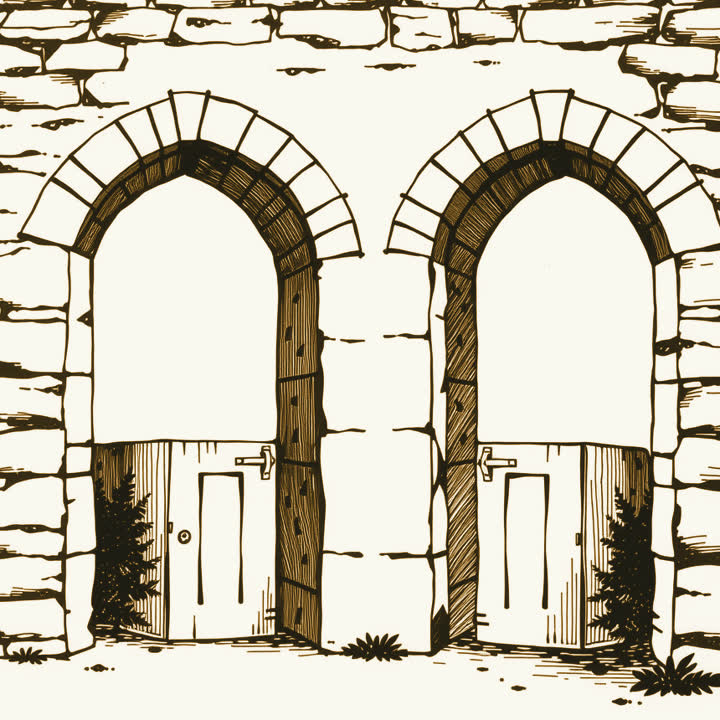
Vienna, 1847. Two maternity wards, one hospital, two very different odds.
In the first clinic, doctors and medical students deliver the babies. In the second, midwives do. Women beg to be admitted to the second. Some give birth in the street rather than risk the first.
A young doctor named Ignaz Semmelweis wants to know why.
The doctors start their mornings in the mortuary, doing autopsies. Then they walk to the ward. The midwives don’t. A colleague dies after a cut from a student’s scalpel during an autopsy, with the same symptoms as the mothers. Semmelweis makes the link. Something from the corpses is travelling on the doctors’ hands.
He makes them wash. The dying stops.
From May 1847, every doctor scrubs with chlorinated lime before touching a patient. In April, 18% of the mothers on the ward had died. By the summer it is around 2%, and some months it is close to zero. He has found one of the most important facts in medicine, with a bucket and a brush.
And his colleagues reject it.
Germs are not yet known. Disease is thought to come from bad air. His idea has no mechanism, and worse, it says that doctors have been killing their patients. A doctor of the era is remembered for saying that doctors are gentlemen, and gentlemen’s hands are clean. He is passed over, and leaves Vienna.
It ends badly. Then the world catches up.
He waits 14 years to publish properly, and when he does, he writes furious open letters calling his critics murderers. In 1865 he is committed to an asylum and dies there within two weeks. Pasteur and Lister prove him right within the decade. The reflex that killed his idea has his name now. Nobody remembers his critics.
The Semmelweis reflex is the flinch.
New evidence arrives. It contradicts what everyone knows, and it makes you look bad. The reflex is to reject it before looking, and the rejection feels like rigour. The name is modern, and the story is often told with him as a pure martyr. He was also difficult and slow to publish. Both are true. The hands were still dirty.
Catch the flinch before it catches you.
When a claim makes you angry, ask two things. What would it cost to test it? And what would it cost me if it were true? If the first is small and the second is large, you are not judging the evidence. You are defending yourself. Wash your hands anyway.
Sources
- Ignaz Semmelweis, Wikipedia. The documented case: the two clinics, the monthly death rates before and after chlorine washing, the rejection, and the end in the asylum.
- The Doctors’ Plague, Sherwin Nuland, 2003. A surgeon’s short biography of Semmelweis that gives his critics their due and does not flinch from his own part in the disaster. This page is Nuland’s biography. Search the title to find it.
- Semmelweis reflex, Wikipedia. The modern name for the flinch, where it came from, and the other cases it has been pinned to since.
Nearby ideas
- Confirmation bias. We look for evidence that agrees, and rarely test what could say no.
- Motivated reasoning. We set a lower bar for evidence we want to believe.
- Bayesian updating. Change your mind in proportion to the strength of the evidence.
- The illusion of explanatory depth. We think we know how things work until we try to explain them.
- Gell-Mann amnesia. We spot the errors in our own field, then trust everything else.
- The decoy effect. A worse option added to a menu can steer what you choose.
- The endowment effect. We value things more simply because they are ours.
- Inattentional blindness. Focus hard enough and you miss what is right in front of you.