Cobra Effect · Science and philosophy
The nirvana fallacy
Rejecting a good plan for not being perfect keeps a worse one.
7 cards, read aloud in 2:30, with a test and sources.
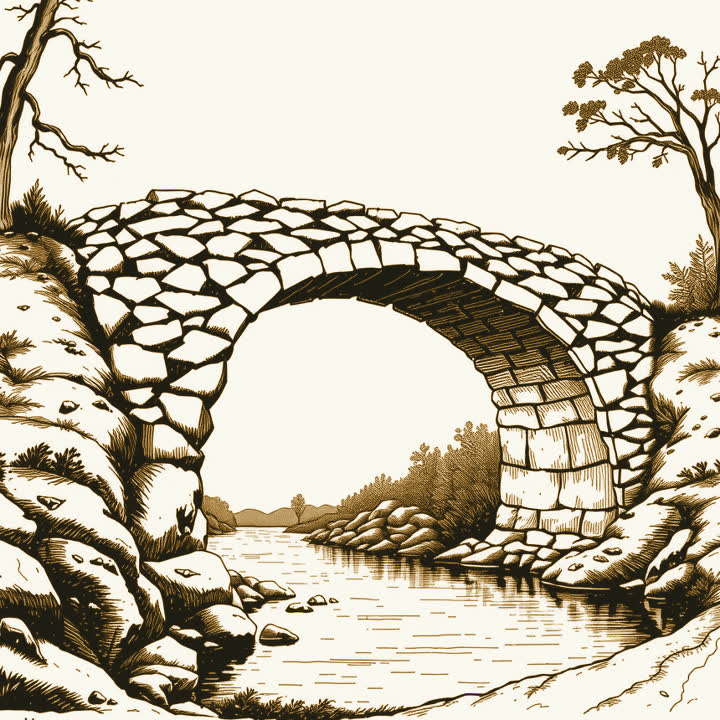
The new bridge will not fix the traffic entirely. So they build nothing.
You have heard the shape of this a hundred times. A proposal is held up against a perfect outcome, found wanting, and dropped. The perfect outcome was never on the table.
It works by quietly swapping the comparison.
You are meant to compare the plan with the other things you could actually do. Instead it gets compared with an imaginary option that carries none of the costs. Against that, everything loses. Every time.
The economist Harold Demsetz named it in 1969.
He was writing about how economists judged markets. They would find a real market imperfect, hold it against an ideal one, and call for the state to step in. Demsetz said the ideal is not on the menu. The choice is always between arrangements that all have faults.
The cost is that the argument stops being about the real world.
A treatment that helps two patients in three is rejected because the third still suffers. A hiring process fairer than the old one is blocked because it is not perfectly fair. Meanwhile the old arrangement carries on, unexamined, because nobody proposed it today.
Not every objection to a plan is this move.
Sometimes a plan really is worse than doing nothing, and somebody should say so. The test is what the plan is being measured against. Against a real alternative, an objection is an argument. Against a perfect one, it is a way of saying no without having to say no.
Voltaire passed on an Italian saying about this.
The best is the enemy of the good. Chase the flawless version and you will usually end up with the version you already had. Which is rarely the one anybody would have chosen.
The question that puts the comparison back.
Compared to what? Ask it out loud, and make whoever objects name a real alternative with its own costs attached. If they cannot name one, the objection is not really about your plan. Carrying on as you are is an option too, and it has a price. Put it on the list.
Sources
- Nirvana fallacy, Wikipedia. Harold Demsetz coined the name in a 1969 paper called Information and Efficiency: Another Viewpoint. Search that title for the paper. This page covers the argument and the examples.
- Candide, Voltaire, 1759. A short, savage comedy aimed at the idea that we live in the best of all possible worlds. Voltaire also passed on the line that the best is the enemy of the good.
- Perfect is the enemy of good, Wikipedia. The saying, where it came from, and how it shows up in engineering, medicine and public policy.
Nearby ideas
- Opportunity cost. The real price of anything is the best thing you gave up for it.
- Satisficing. Good enough, chosen quickly, often beats the endless hunt for best.
- Steelmanning. Argue against the strongest version of a view, not the weakest.
- Falsifiability. A claim that nothing could disprove tells you nothing.
- The problem of induction. A long run of past successes cannot prove the next one.
- The ship of Theseus. Replace every part, and ask whether it is still the same thing.
- The trolley problem. Why harm that follows from a plan feels different from harm that is the plan.
- The placebo effect. Much of what a dummy pill seems to do would have happened anyway.