Cobra Effect · Incentives and systems
The Lindy effect
The longer an idea has lasted, the longer it is likely to last.
6 cards, read aloud in 2:25, with a test and sources.
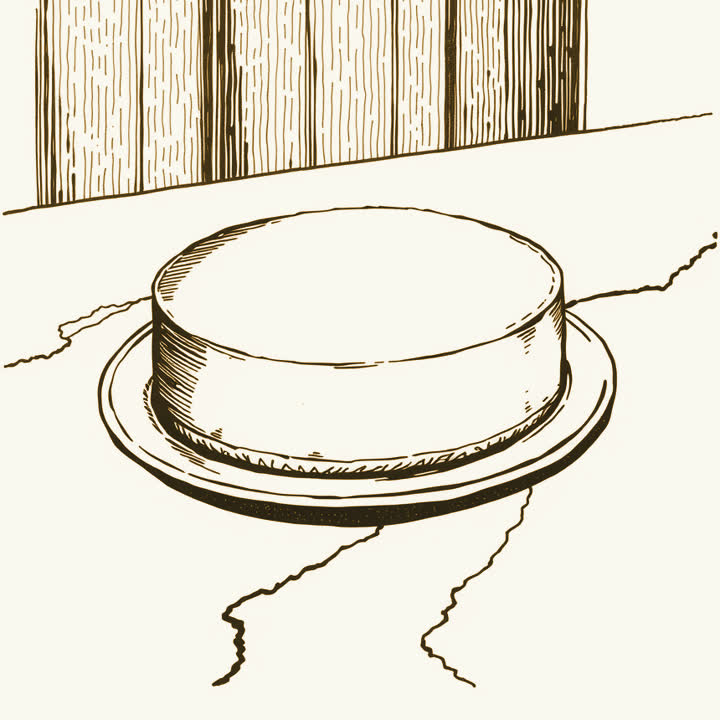
A deli on Broadway. Comedians arguing about how long they will last.
Lindy’s, New York, in the early 1960s. The comics who ate there had a rule of thumb about careers on television. Albert Goldman wrote it up in 1964 and called it Lindy’s law. Nobody at the counter was thinking about mathematics.
A mathematician picked it up and turned it around.
Benoit Mandelbrot restated it in 1982. For some things, the longer they have already lasted, the longer you should expect them to go on. Not a comedian, who burns out. A body of work. An idea. A technology.
That is the Lindy effect. Some things age backwards.
Nassim Taleb gave it its wide use in 2012, in a book called Antifragile. A person of 40 expects fewer years ahead than a person of 20. A book in print for 40 years should expect more years ahead than a book in print for 2. Perishable things wear out. Non-perishable things get tested. Every year survived is evidence of whatever keeps them alive.
It is a rule for prediction, not a rule for taste.
It does not say old things are better. It says the old thing has already survived the test the new thing has not yet sat. Euclid has been read for 2,300 years. The odds are good for the next century. A bestseller from last spring has survived one spring.
Where it earns its keep.
Choosing what to read: the book that has stayed in print beats the one being talked about. Choosing tools: the boring one that has lasted twenty years will probably last twenty more. Choosing advice: a habit people have kept for centuries has passed more tests than one from a study last year.
The question to ask.
How long has this already lasted? For anything that does not wear out, that is the best single guess about how long it will go on. The new thing might be the future. The old thing has already been the future, several times.
Sources
- The Fractal Geometry of Nature, Benoit Mandelbrot, 1982. Where the deli rule became a mathematical one. Mandelbrot restated it as proportional expected survival and kept Lindy’s name on it.
- Antifragile, Nassim Nicholas Taleb, 2012. The chapter on the Lindy effect is where the idea got its current shape: things that do not perish age in reverse. Use it as a filter for books, tools and advice.
- Lindy effect, Wikipedia. Goldman’s 1964 article, Mandelbrot’s version, Taleb’s version, and the arguments about where it applies and where it does not.
Nearby ideas
- Survivorship bias. The failures you never see can reverse the lesson you draw.
- Chesterton’s fence. Before removing a rule, find out why it was put there.
- Path dependence. Why early choices stay locked in long after better ones appear.
- Antifragility. Some things get stronger from knocks, and fail without them.
- The Streisand effect. Trying to hide something is often the best way to spread it.
- The principal-agent problem. When someone acts for you, their own interests quietly steer the work.
- Feedback loops. Why some systems spiral out of control and others settle down.
- The race to the bottom. When rivals keep undercutting each other, everybody loses.