Cobra Effect · Incentives and systems
Antifragility
Some things get stronger from knocks, and fail without them.
7 cards, read aloud in 2:56, with a test and sources.
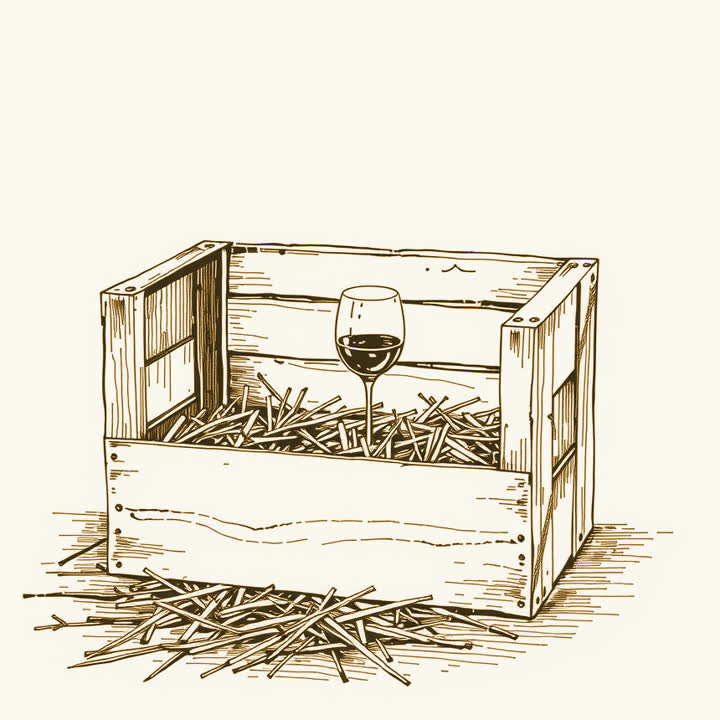
You post a parcel of wine glasses. You write one word on the box.
Fragile. Handle with care, because shaking it can only do harm. Now imagine a parcel that wants to be shaken. One that arrives in better shape the rougher the road. Is there a word for that?
Nassim Taleb said there wasn’t, so he made one up.
His 2012 book is called Antifragile. He is a former trader who spent his career watching things break. The opposite of fragile, he argued, is not robust. Robust just means the shaking does nothing. The true opposite is something that gains from the shaking.
Your bones already know this.
Load a bone and it lays down more bone. Rest it in a cast and it thins. A muscle tears a little under a heavy weight and grows back thicker. Your immune system meets a small dose of a germ and builds a defence against the large one. None of these are merely surviving stress. They are feeding on it.
Three figures from myth. Taleb uses them as the whole idea.
Damocles sits under a sword held by a single hair. Fragile. The phoenix burns and returns exactly as it was. Robust. The Hydra loses a head and grows two. Antifragile. Most things we build are Damocles, and we call them robust because the hair hasn’t snapped yet.
Now look at the restaurant trade.
Any single restaurant is fragile. Most close within a few years. But the trade as a whole is superb, and it is superb because they close. Every failure teaches the survivors something. Every closure frees a site for a better idea. The system gets stronger from the very thing that kills its parts. Rescue every restaurant and you would eat worse.
That is antifragility.
A fragile thing is harmed by shocks. A robust thing shrugs them off. An antifragile thing gets better from them, up to a point. A bone gains from a run and breaks under a truck. It needs many small stresses and no fatal ones.
So ask of anything you rely on: what does a bad week do to it?
If it gets weaker, it is fragile, and you want fewer surprises or a smaller exposure. If it gets stronger, give it more small trouble, not less. Let the junior make the small mistake now, so the big one never arrives. Taleb put it in one sentence. Wind puts out a candle and feeds a fire.
Sources
- Antifragility, Wikipedia. The idea, the three way split between fragile, robust and antifragile, the examples from biology and economics, and the criticism.
- Antifragile: Things That Gain from Disorder, Nassim Nicholas Taleb, 2012. The original, long and combative. The prologue and the first few chapters carry the idea. The rest is Taleb applying it to medicine, finance and everything else.
- Hormesis, Wikipedia. The biology underneath. Small doses of a stressor that would harm in large doses can strengthen an organism instead. Exercise, fasting and some poisons.
Nearby ideas
- The Lindy effect. The longer an idea has lasted, the longer it is likely to last.
- Second order effects. Every fix has consequences, and those have consequences too.
- The problem of induction. A long run of past successes cannot prove the next one.
- The Streisand effect. Trying to hide something is often the best way to spread it.
- The principal-agent problem. When someone acts for you, their own interests quietly steer the work.
- Feedback loops. Why some systems spiral out of control and others settle down.
- The race to the bottom. When rivals keep undercutting each other, everybody loses.
- Network effects. Why the biggest network tends to swallow the rest.