Cobra Effect · Incentives and systems
The Streisand effect
Trying to hide something is often the best way to spread it.
7 cards, read aloud in 3:02, with a test and sources.
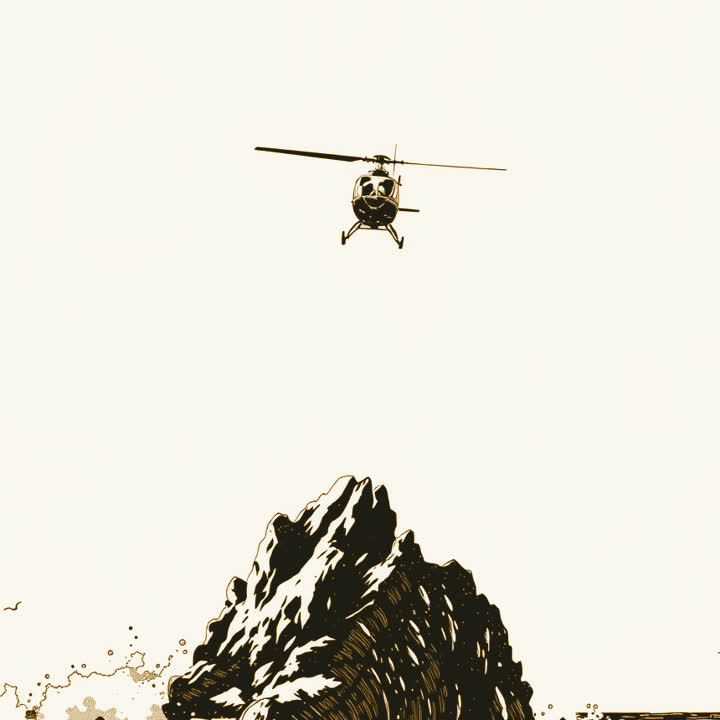
Malibu, 2003. A photographer is flying the length of the California coast.
Kenneth Adelman is taking a picture every few hundred metres from a helicopter. He wants a record of the whole shoreline, to track erosion. More than 12,000 photos go up on a public website. One of them is numbered 3850. It shows a cliff, a beach, and a large house.
The house belongs to Barbra Streisand. She sues for $50 million.
Her lawyers say the photo invades her privacy and want it taken down. Before the lawsuit, the picture had been downloaded six times. Two of those were her own lawyers. Then the case hits the news.
In the next month, more than 420,000 people come to look at it.
The photo that nobody had noticed becomes one of the most viewed pictures of a house on earth. The court throws the case out and orders her to pay Adelman’s legal fees. The house is in every article about the lawsuit, and in stories like this one. She wanted it unseen. She made it famous.
Two years later it got a name.
Mike Masnick, who runs the site Techdirt, called it the Streisand effect in 2005. He was writing about a resort that had tried to have a picture of its urinals removed from the web. The attempt to suppress something is what publicises it. The suppression is the story. The secret is just the punchline.
It has happened to bigger players than a singer.
In 2007 the group that licensed the copy protection on HD DVDs sent legal notices demanding websites remove a 32 character code that unlocked it. Within days the code was on hundreds of thousands of pages, on T shirts, and in a song. Every notice was a press release. The code was useless to almost everyone who shared it. Being told not to was the whole appeal.
Why it works against you.
Attention runs on two fuels. Something worth seeing, and something someone doesn’t want you to see. The second fuel is stronger, and a lawsuit hands it over for free. Before the fight, the only people who cared were the ones who found it. After the fight, everyone who hears about the fight wants to see what it was about.
So before you try to bury something, ask who is looking now.
If the answer is almost nobody, the quietest thing you can do is nothing. If you must act, act privately, and never in a way that makes a story. And when you see someone else fighting to hide a thing, notice that you now know about it. That is the effect, working on you.
Sources
- Streisand effect, Wikipedia. The 2003 lawsuit with the download and visitor figures, Masnick’s coining of the term in 2005, and a long list of later cases.
- So You’ve Been Publicly Shamed, Jon Ronson, 2015. What happens when the internet turns its attention on one person. The same machine seen from the other side, told through the people it ran over.
- AACS encryption key controversy, Wikipedia. The 2007 case. A 32 character code, a wave of legal notices, and a code that ended up on T shirts and in songs because people were told to delete it.
Nearby ideas
- Second order effects. Every fix has consequences, and those have consequences too.
- The Cobra effect. Why paying for a result can breed more of the problem.
- The availability heuristic. Vivid stories make rare dangers feel common.
- The principal-agent problem. When someone acts for you, their own interests quietly steer the work.
- Feedback loops. Why some systems spiral out of control and others settle down.
- The race to the bottom. When rivals keep undercutting each other, everybody loses.
- Network effects. Why the biggest network tends to swallow the rest.
- The winner’s curse. Win an auction for something uncertain and you probably overpaid.